
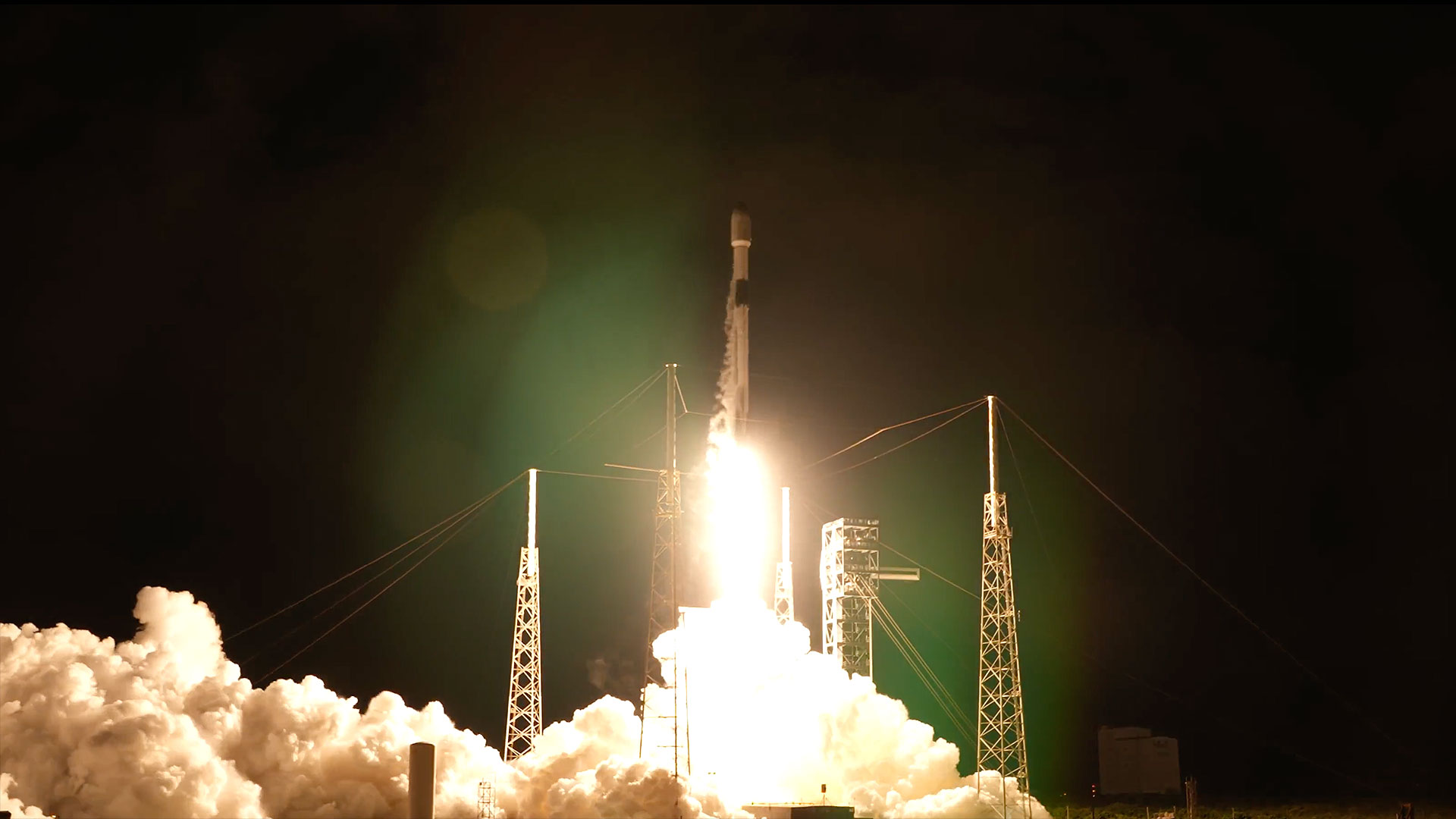
SpaceX Launches Falcon 9 from Florida on NASA Cargo Mission
SpaceX has successfully launched its Falcon 9 rocket from Florida, delivering a Dragon cargo spacecraft carrying essential supplies and scientific equipment to the International Space Station (ISS). The launch took place on Tuesday, October 13, 2026, at approximately 6:33 a.m. Eastern Daylight Time from Space Launch Complex 40 at Cape Canaveral Space Force Station. The mission forms part of NASA's Commercial Resupply Services programme, which uses commercial spacecraft to transport cargo and research materials to the orbiting laboratory.
The mission, designated CRS-35, carried more than three tonnes of supplies, equipment and scientific materials intended to support astronauts and research activities aboard the ISS. The Dragon spacecraft is expected to reach the station following a journey of approximately two days, where it will deliver cargo for ongoing scientific investigations and station operations. The resupply programme enables researchers to conduct experiments in microgravity that would be difficult or impossible to perform under Earth's normal conditions.
The launch also attracted attention because of a striking visual phenomenon observed across parts of the southeastern and eastern United States. The rocket's exhaust plume expanded high in the atmosphere, producing a glowing formation that resembled a giant jellyfish with long trailing tentacles. The effect occurred because the rocket launched shortly before sunrise, allowing sunlight to illuminate its plume while the ground below remained relatively dark. The unusual display was visible across several states and generated widespread interest among observers.
The phenomenon is associated with the interaction between rocket exhaust, atmospheric moisture and sunlight at high altitudes. As the rocket climbs through the atmosphere, exhaust gases and water vapour can expand rapidly in the low-pressure environment, creating a broad plume. When sunlight strikes these particles before sunrise at ground level, the plume can appear brightly illuminated against the darker sky. Although such displays can look unusual, they are a known visual effect of certain rocket launches under favourable atmospheric and lighting conditions.
The mission further demonstrates SpaceX's continuing role in NASA's efforts to maintain the International Space Station and support scientific research in orbit. The company's reusable Falcon 9 rocket has become a central part of its launch operations, with its first stage designed to return to Earth for recovery and potential reuse. Reusability helps SpaceX reduce the need to manufacture an entirely new first stage for every mission, although each recovered booster still requires inspection and preparation before flying again.
Cargo missions to the ISS support a wide range of scientific work, including research into human health, biology, materials science and technologies that may be useful for future exploration. Regular deliveries are also necessary to provide astronauts with food, equipment and other supplies while transporting materials needed to maintain station operations. NASA's partnership with commercial providers such as SpaceX forms part of a broader approach to maintaining access to low Earth orbit.
With the CRS-35 launch completed successfully, attention now turns to the Dragon spacecraft's arrival at the International Space Station and the delivery of its cargo. Beyond the mission's scientific purpose, the spectacular atmospheric display provided a reminder of how routine spaceflight operations can sometimes create striking sights for people watching from Earth.