Critical security vulnerabilities discovered in PHP have prompted governments and organisations to temporarily take some websites offline while applying emergency updates. The flaws could allow attackers to execute malicious code remotely, raising concerns about the security of websites worldwide.
NAIROBI, KENYA — Kenya’s education sector has plunged into its most critical month of the year as a record-breaking 3.6 million learners begin their national examinations. The 2026 cycle is a historic milestone, but it faces a perfect storm: a high-stakes teacher boycott threat, severe weather disruptions across the country, and the pressure of a massive curriculum transition. A Record-Breaking Cohort This year’s numbers are unprecedented. The Kenya Certificate of Secondary Education (KCSE) has crossed a historic threshold, with 1,048,355 candidates registered to sit the exams. This represents a surge of over 52,000 students compared to last year. At the same time, the primary and junior school levels are preparing for a massive double-tier assessment. On Monday, October 26, 2026, millions of younger learners will sit for the Kenya Primary School Education Assessment (KPSEA) for Grade 6 and the newly introduced Kenya Junior School Education Assessment (KJSEA) for Grade 9. This marks a critical moment in Kenya’s full transition into the Competency-Based Curriculum (CBC). The KUPPET Standoff: Examination Rooms at Risk The massive scale of these exams is facing immediate friction from a looming labor crisis. The Kenya Union of Post-Primary Education Teachers (KUPPET) has issued a directive to its members to withdraw from all exam duties, including supervision, invigilation, and marking. Union officials argue that teachers are being underpaid for highly sensitive, stressful work. KUPPET is demanding a flat out-of-pocket allowance of Ksh 4,000 per day for supervisors, alongside a substantial increase in per-paper marking fees to cushion educators against inflation. With school principals under immense pressure, the Kenya Secondary Schools Heads Association (KESSHA) is rushing to broker emergency talks between the government and the union to avoid an administrative collapse when core theory papers begin. Battle with the Elements Logistical challenges are being worsened by severe weather. Heavy downpours have triggered regional flood alerts, particularly in Western Kenya, parts of the Rift Valley, and coastal areas. In flood-prone regions like Budalang'i and parts of Kakamega, compromised infrastructure has put the safe transit of exam papers—and the safety of invigilators—at serious risk. To counter this, the Kenya National Examinations Council (KNEC) has established 642 secure container sites nationwide. These heavily guarded distribution hubs are designed to minimize travel distances and protect exam materials from rain damage. However, teachers' unions have advised their members to prioritize personal safety and halt movement if flash floods render roads impassable. Stringent New Rules to Fight Cheating To protect the credibility of the certificates issued, KNEC has rolled out strict technical and security measures. Multi-agency security teams are monitoring the exact timing of container openings to stop early digital leaks on social media platforms. For the primary school tier, the rules have become highly technical. KNEC has banned all fountain pens and biros for KPSEA candidates. Learners must use pencils only to fill out their personalized Optical Mark Reader (OMR) sheets. This rigid enforcement is meant to prevent ink-bleeding and ensure automated scanning machines can accurately grade millions of papers without technical errors.
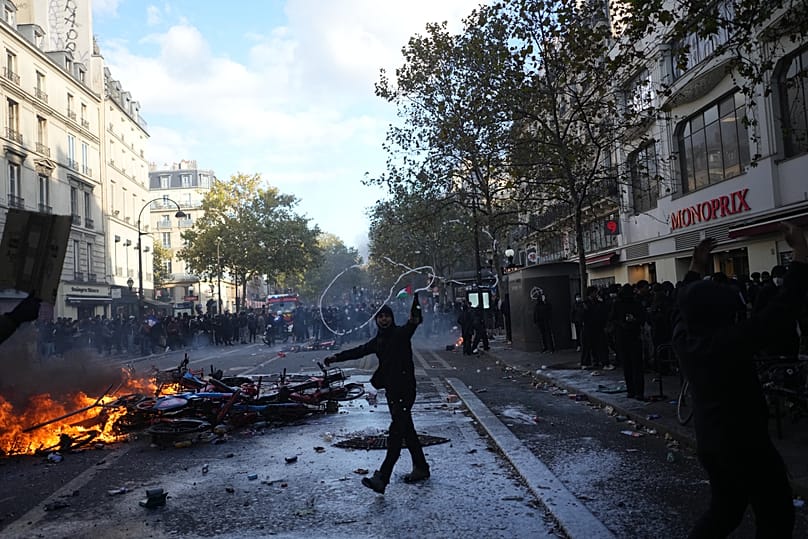
Clashes intensified across major French cities overnight as the government deployed thousands of riot police to quell ongoing civil unrest. What began as peaceful demonstrations over rising inflation, public spending cuts, and immigration policies quickly dissolved into widespread rioting, with major damage reported to public infrastructure. In response to the escalating violence, local authorities have begun implementing strict overnight curfews in heavily affected districts, while government officials blame extremist factions for hijacking the economic protests.

Amazon is introducing AI wearables designed to turn everyday conversations into notes, reminders and tasks. The move offers a glimpse of a future where people spend less time switching between apps and more time getting things done.

Looking for a fresh place to share photos, build your online identity and discover new people? FACE CARD brings profiles, photo sharing and social networking together in a sleek, dark-themed platform worth exploring.

Tesla has unveiled its redesigned next-generation Roadster, featuring SpaceX-designed thrusters capable of lifting and manoeuvring the vehicle during a demonstration. The electric sports car boasts extraordinary performance claims, including acceleration from 0 to 60 mph in under one second, while production is targeted for 2028.

Rockstar Games has confirmed that Grand Theft Auto VI will launch on November 19, 2026, for PlayStation 5 and Xbox Series X|S. The highly anticipated game returns players to Vice City in a new crime story featuring protagonists Jason Duval and Lucia Caminos.

The extra second added to keep clocks aligned with Earth's rotation could be phased out. The proposed change aims to prevent technology disruptions, but it could gradually separate official time from the natural day-and-night cycle.

Google is making it easier to turn AI-generated app ideas into working Android apps. Users can now install personal apps built with Google AI Studio through Google Play without paying for a developer account, although the feature is initially limited to adults in select markets.

Kenya’s Court of Appeal has rejected applications by the government and Vodacom to suspend a High Court judgment that nullified the sale of the State’s 15 per cent stake in Safaricom for KSh 204.3 billion. The decision leaves the September 15 ruling in force as the legal battle over the transaction continues.

As the world prepares for COP31, Africa faces an important question: can we build a smarter future without overlooking the resources that make it possible?