Tesla Unveils New Roadster Featuring SpaceX Rocket Thrusters
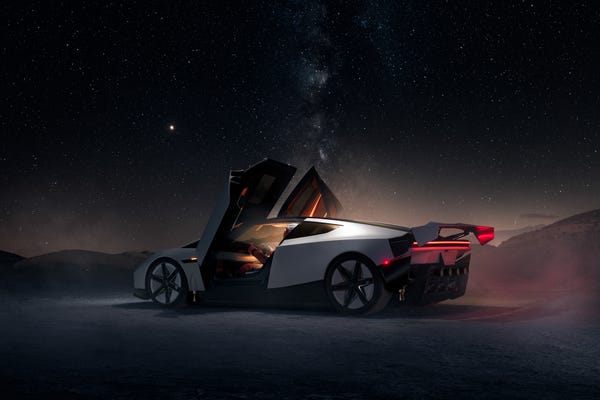
Tesla has unveiled its redesigned next-generation Roadster, showcasing an electric sports car equipped with experimental technology developed in collaboration with SpaceX. During a demonstration in Texas on October 15, 2026, the vehicle performed a series of extraordinary manoeuvres, including driving upside down on a specially designed ramp, rotating in mid-air and landing with assistance from rocket-style thrusters. The unveiling has renewed attention on one of Tesla’s most anticipated vehicles after years of development delays.
The demonstration featured a combination of electric vehicle engineering and aerospace technology. The Roadster uses cold-gas thrusters developed with SpaceX, Elon Musk’s aerospace company, to generate additional force for manoeuvres that conventional road cars cannot perform. A specialised suction system was also demonstrated, allowing the vehicle to remain attached to an inverted surface under controlled conditions. Although the demonstration attracted comparisons with a flying car, the technology was presented in a specialised setting, and the vehicle should not be confused with a conventional road car capable of unrestricted flight.
Tesla’s vehicle engineering chief, Lars Moravy, said the Roadster could accelerate from zero to 60 miles per hour in less than one second in its most extreme configuration. The company also cited a top speed exceeding 230 mph and a driving range of more than 300 miles on a single charge. These figures are manufacturer claims associated with the new vehicle, and independent testing will be needed to establish how the production versions perform under real-world conditions.
The new Roadster is being developed in several configurations, with different levels of performance and technology. The more conventional Performance version is designed as a two-seat electric sports car, while the Thrust and Rocket variants incorporate additional thruster technology. Tesla has described the Rocket configuration as a specialised model with a full flight system, but it has not been presented as an ordinary production vehicle approved for unrestricted public-road use. The configurations demonstrate the company’s attempt to combine electric propulsion, aerodynamic engineering and aerospace-inspired systems in a single vehicle.
Despite the dramatic unveiling, the Roadster is not expected to enter production immediately. Tesla is targeting 2028 for the start of production, meaning customers may still have to wait more than a year before the vehicle reaches the market. The programme has experienced repeated delays since the second-generation Roadster was first introduced as a prototype in November 2017, when Tesla initially projected that deliveries would begin in 2020. The latest announcement provides a new production target, but the company has not yet delivered the vehicle to customers.
Pricing also remains an important unanswered question. Tesla has reopened reservations for versions of the Roadster, with reported deposits ranging from $50,000 for the Performance configuration to $250,000 for the specialised Thrust version. The Rocket variant has been described as invitation-only. However, Tesla has not provided complete final pricing information for the different configurations, and reservation deposits do not mean that deliveries are imminent.
The Roadster holds particular significance for Tesla because its original model helped establish the company as an early contender in the electric vehicle market. Introduced in 2008, the first Roadster demonstrated that an electric car could offer sports-car performance and attracted international attention to the emerging electric vehicle industry. The next-generation model was subsequently presented in 2017 with ambitious performance targets, but its prolonged development has left prospective buyers waiting far longer than originally anticipated.
The latest unveiling comes as Tesla places increasing emphasis on artificial intelligence, autonomous driving technology and robotics alongside its electric vehicle business. The Roadster therefore serves as a showcase for the company’s engineering ambitions, while the involvement of SpaceX highlights the potential for technology developed across Musk’s businesses to be incorporated into new products. However, the commercial significance of the vehicle will ultimately depend on production, pricing, reliability and whether its advanced features can be delivered to customers as promised.
For now, the new Roadster has provided one of Tesla’s most unusual vehicle demonstrations, combining electric sports-car performance with experimental aerospace-inspired technology. Its proposed 2028 production target gives the project a new milestone, but questions remain over final specifications, pricing, road-use restrictions and delivery schedules. The challenge ahead will be turning the spectacular demonstration into a commercially available vehicle that meets the expectations built up over nearly a decade.