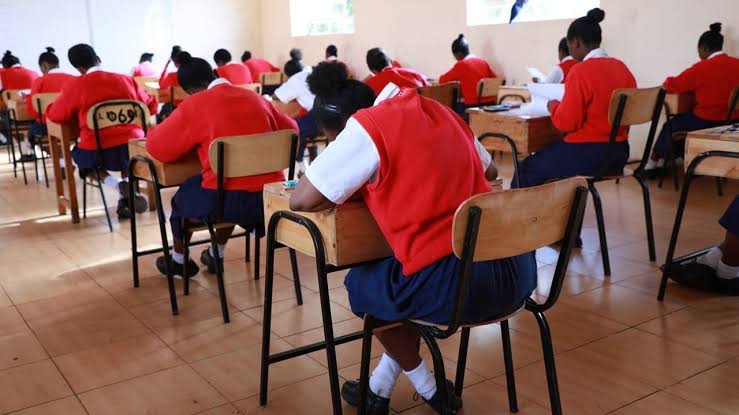

The 2026 examination season is a true test of Kenya’s institutional resilience. Successfully assessing 3.6 million students requires a delicate balance of ironclad security, logistical agility, and fair labor practices. If the Ministry of Education wants to safeguard the future of this generation, it must move quickly to resolve the financial dispute with teachers and keep exam centers safe from the elements.
Featurededucation
Stakes 2026 National Examination Season
NAIROBI, KENYA — Kenya’s education sector has plunged into its most critical month of the year as a record-breaking 3.6 million learners begin their national examinations. The 2026 cycle is a historic milestone, but it faces a perfect storm: a high-stakes teacher boycott threat, severe weather disruptions across the country, and the pressure of a massive curriculum transition. A Record-Breaking Cohort This year’s numbers are unprecedented. The Kenya Certificate of Secondary Education (KCSE) has crossed a historic threshold, with 1,048,355 candidates registered to sit the exams. This represents a surge of over 52,000 students compared to last year. At the same time, the primary and junior school levels are preparing for a massive double-tier assessment. On Monday, October 26, 2026, millions of younger learners will sit for the Kenya Primary School Education Assessment (KPSEA) for Grade 6 and the newly introduced Kenya Junior School Education Assessment (KJSEA) for Grade 9. This marks a critical moment in Kenya’s full transition into the Competency-Based Curriculum (CBC). The KUPPET Standoff: Examination Rooms at Risk The massive scale of these exams is facing immediate friction from a looming labor crisis. The Kenya Union of Post-Primary Education Teachers (KUPPET) has issued a directive to its members to withdraw from all exam duties, including supervision, invigilation, and marking. Union officials argue that teachers are being underpaid for highly sensitive, stressful work. KUPPET is demanding a flat out-of-pocket allowance of Ksh 4,000 per day for supervisors, alongside a substantial increase in per-paper marking fees to cushion educators against inflation. With school principals under immense pressure, the Kenya Secondary Schools Heads Association (KESSHA) is rushing to broker emergency talks between the government and the union to avoid an administrative collapse when core theory papers begin. Battle with the Elements Logistical challenges are being worsened by severe weather. Heavy downpours have triggered regional flood alerts, particularly in Western Kenya, parts of the Rift Valley, and coastal areas. In flood-prone regions like Budalang'i and parts of Kakamega, compromised infrastructure has put the safe transit of exam papers—and the safety of invigilators—at serious risk. To counter this, the Kenya National Examinations Council (KNEC) has established 642 secure container sites nationwide. These heavily guarded distribution hubs are designed to minimize travel distances and protect exam materials from rain damage. However, teachers' unions have advised their members to prioritize personal safety and halt movement if flash floods render roads impassable. Stringent New Rules to Fight Cheating To protect the credibility of the certificates issued, KNEC has rolled out strict technical and security measures. Multi-agency security teams are monitoring the exact timing of container openings to stop early digital leaks on social media platforms. For the primary school tier, the rules have become highly technical. KNEC has banned all fountain pens and biros for KPSEA candidates. Learners must use pencils only to fill out their personalized Optical Mark Reader (OMR) sheets. This rigid enforcement is meant to prevent ink-bleeding and ensure automated scanning machines can accurately grade millions of papers without technical errors.
By J.Wangechi · October 20, 2026 · 1 min read
Share
#kcse#kcpe#kjsea#knec#kuppet#cbc
Comments
No comments yet — be the first to weigh in.