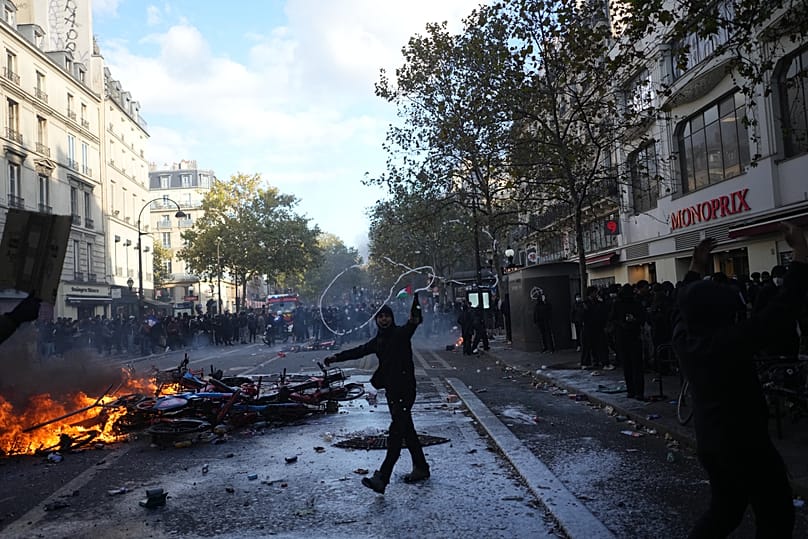
PARIS — Clashes intensified across major French cities overnight as the government deployed thousands of riot police to quell ongoing civil unrest. What began as peaceful demonstrations over rising inflation, public spending cuts, and immigration policies quickly dissolved into widespread rioting, with major damage reported to public infrastructure. In response to the escalating violence, local authorities have begun implementing strict overnight curfews in heavily affected districts, while government officials blame extremist factions for hijacking the economic protests.
The unrest, which has now entered its second week, represents the most severe domestic challenge to the current administration in years. Demonstrators initially took to the streets to voice frustration over a stagnant economy, dwindling purchasing power, and controversial legislative reforms. However, the movement rapidly fractured as more radical elements joined the fray. Over the weekend, iconic thoroughfares in Paris, Lyon, and Marseille transformed into battlegrounds, marked by burning barricades, shattered storefronts, and thick clouds of tear gas.
Public infrastructure has borne the brunt of the destruction. Emergency services reported treating dozens of individuals for minor injuries, including both protestors and law enforcement officers, as fireworks and bricks were exchanged for rubber bullets and water cannons. Several historic municipal buildings were vandalized, forcing transit networks to suspend operations across multiple metropolitan lines.
Addressing the nation in a late-night televised broadcast, officials condemned the property damage and looting, drawing a sharp line between legitimate democratic protest and criminal vandalism. While activist groups maintain that the heavy-handed police response has only served to inflame the crowds, the interior ministry insisted that the newly enacted curfews are a necessary measure to restore public safety and protect local businesses from further ruin.