
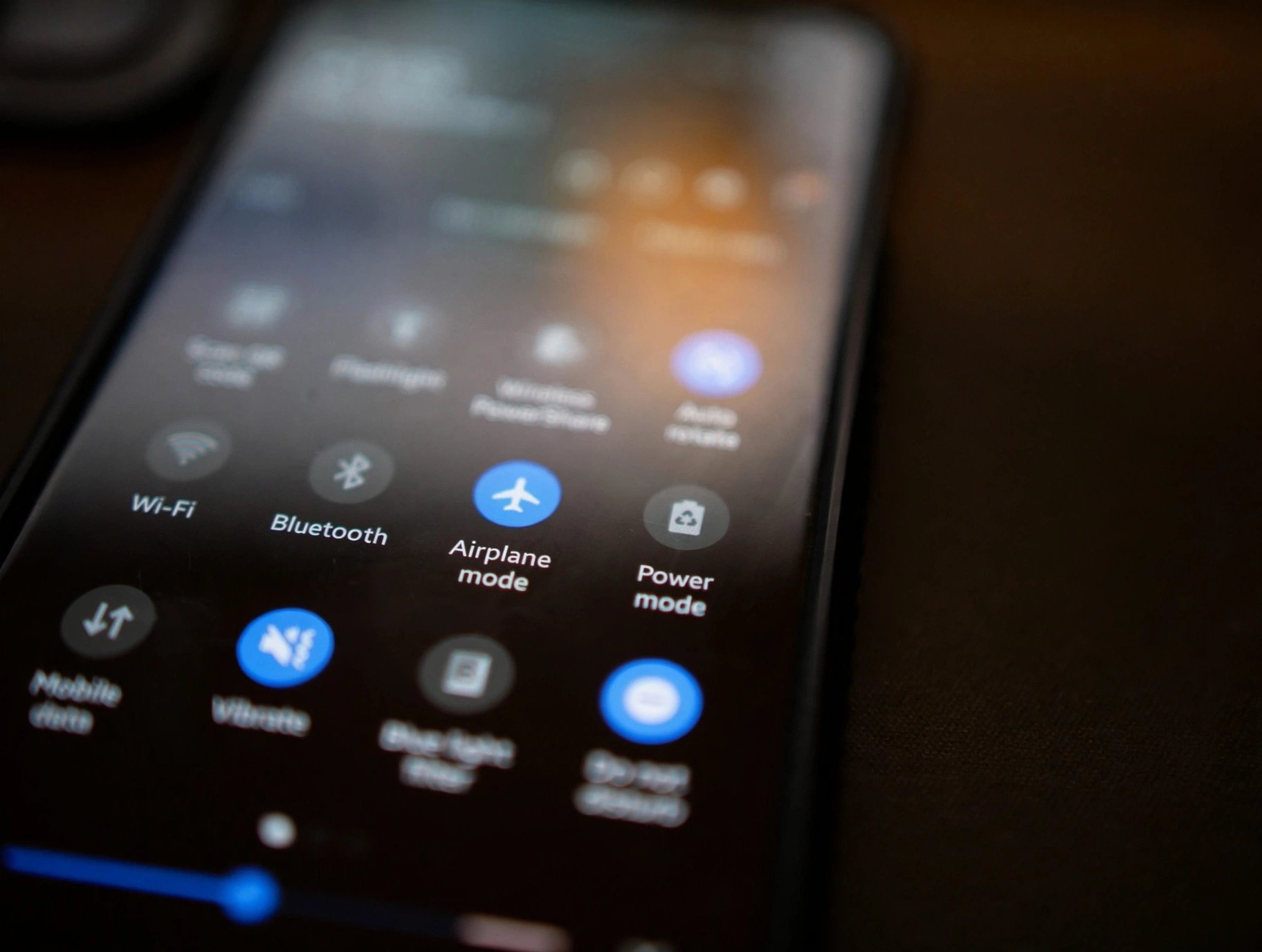
Your smartphone can stream videos, connect to wireless headphones and perform thousands of tasks without making a traditional phone call. So why do airlines still ask passengers to switch on airplane mode?
The answer goes beyond the name. Although modern aircraft are designed to handle many forms of electronic interference, cellular transmissions, aviation regulations and practical considerations still make airplane mode useful.
What Airplane Mode Actually Does
Airplane mode is a setting that quickly disables your phone's cellular connection and usually turns off Wi-Fi and Bluetooth as well. On most modern smartphones, you can switch Wi-Fi and Bluetooth back on individually while leaving cellular service disabled.
That means you can listen to music through wireless headphones or connect to an aircraft's Wi-Fi network when the airline permits it.
The feature became especially useful as phones evolved into entertainment devices. Passengers can watch downloaded films, read books, play offline games and listen to podcasts without needing a cellular connection.
Why Airlines Still Require It
The main concern is not that one phone will automatically bring down an aircraft. Aviation authorities recognise that electronic devices can potentially interfere with aircraft communication or navigation systems, and airlines assess what their aircraft can safely tolerate.
There is also a separate concern involving ground-based cellular networks. A phone travelling at aircraft altitude and speed may attempt to connect to multiple cell towers, potentially creating network-management problems.
Rules differ by country, aircraft and airline. Some aircraft offer approved onboard connectivity, and certain jurisdictions permit additional services under specific technical conditions. Passengers should therefore follow the crew's instructions rather than assume that a particular setting is optional.
Airplane mode also helps preserve battery life. Without a reliable cellular signal, a phone may repeatedly search for a network and use additional power. Disabling cellular service can reduce that activity during a flight.
Useful Beyond the Airport
Airplane mode has several practical uses on the ground, too.
- Save battery: Disabling cellular service can help when reception is weak and your phone keeps searching for a signal.
- Troubleshoot connections: Switching airplane mode on and off can refresh your phone's wireless connections when cellular service behaves unexpectedly.
- Avoid roaming: Turning off cellular service can prevent your phone from connecting to foreign mobile networks, although you should check other connectivity settings and your carrier's terms.
- Reduce interruptions: Airplane mode can temporarily disconnect you from calls and mobile data, although Focus or Do Not Disturb is usually better when you want to silence notifications while staying connected.
Airplane mode is not an automatic battery-saving miracle, and the benefit varies with signal strength and how you use your phone.
A Small Setting With a Practical Purpose
Airplane mode has survived the smartphone era because it solves a simple problem: it gives users a quick way to disable wireless transmissions without switching off their entire device.
Modern aircraft and mobile technology have evolved, and rules have become more flexible in some circumstances. But that does not make the setting obsolete.
On your next flight, enable airplane mode when instructed, reconnect only to services the airline permits, and keep your device ready for any safety announcements. It takes seconds, and it helps you use your phone within the rules governing the flight.