
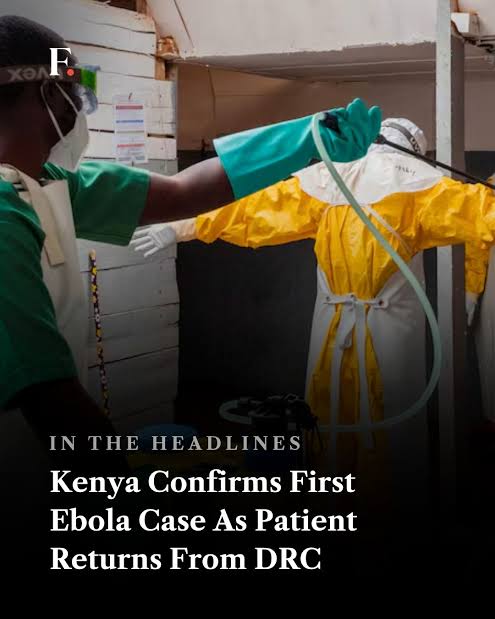
Kenya Traces Flight Contacts After Confirming First Imported Case of Ebola
Health authorities in Kenya have launched an urgent contact-tracing operation following the confirmation of the nation's first imported case of Ebola. The Ministry of Health and public health agencies are actively searching for individuals who came into contact with the patient, including passengers who shared a commercial flight from Kampala, Uganda, to Nairobi.
Health Cabinet Secretary Aden Duale confirmed that the patient was a Kenyan citizen who had resided in the Democratic Republic of Congo (DRC) for the past seven years. The individual fell ill while in the DRC and subsequently traveled by road to Kampala before boarding a flight to Jomo Kenyatta International Airport (JKIA) in Nairobi. Shortly after arriving in Kenya, the patient was admitted to isolation at The Nairobi Hospital, where they ultimately succumbed to the illness.
According to reports from Citizen Digital, health officials have already identified dozens of close contacts, including immediate family members and healthcare workers who provided initial care. Surrounding this immediate ring of contacts, epidemiological teams are actively working to locate 23 passengers and four crew members who were on the same regional flight from Kampala to ensure proper monitoring and isolation protocols are established swiftly.
The Ministry of Health has urged the public to remain calm, noting that comprehensive screening procedures, enhanced laboratory capabilities, and heightened surveillance at border entry points have been reinforced across the country. Contact-tracing protocols dictate that identified individuals undergo a 21-day health monitoring period to prevent any potential community transmission. Public health experts emphasize that Ebola is transmitted primarily through direct contact with infected bodily fluids rather than airborne exposure, making early identification and strict isolation effective measures for halting further spread.
As public health officials collaborate with regional authorities and international health bodies, surveillance remains intensified at key transit hubs. Further updates are expected from health authorities as tracing efforts continue.