BEIJING BECOMES THE NEXT STOP IN THE IRAN-US DIPLOMATIC DRAMA
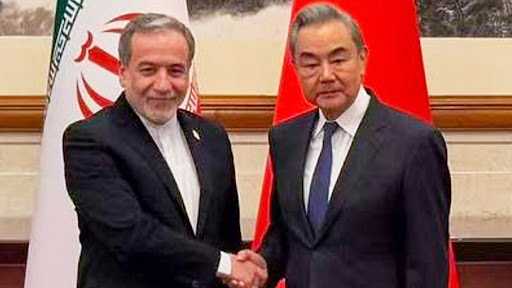
Iranian Foreign Minister Abbas Araghchi is heading to Beijing for talks with Chinese Foreign Minister Wang Yi as tensions between Tehran and Washington continue to reshape the Middle East.
Araghchi is scheduled to visit China on September 16, according to Beijing, making this his second trip to the Chinese capital since the conflict involving Iran, the United States and Israel began earlier this year.
The timing could hardly be more significant.
China is preparing for an expected meeting between President Xi Jinping and US President Donald Trump later this month, while Beijing is simultaneously trying to present itself as a country capable of encouraging dialogue between rival powers.
That creates a potentially powerful diplomatic opportunity — but also a difficult test for China's credibility as a peacemaker.
WHY ARAGHCHI'S VISIT MATTERS
The Iranian foreign minister's visit comes at a moment when Tehran faces pressure from several directions.
Washington is expanding sanctions, the international nuclear dispute has returned to the centre of global attention and the wider conflict has disrupted energy markets.
At the same time, Iran maintains one of its most important international relationships with China.
Beijing remains a major buyer of Iranian crude and has continued to defend its economic interests despite US sanctions.
That gives China something many potential mediators lack: significant economic leverage and direct communication with Tehran.
The question is whether Beijing is willing — or able — to use that influence to push Iran and the United States toward a meaningful diplomatic settlement.
XI WANTS BRICS TO BECOME PART OF THE PEACE EFFORT
Xi Jinping recently called on BRICS countries to play a greater role in promoting peace in the Middle East.
Speaking at the BRICS summit in New Delhi, Xi argued that the bloc should contribute to resolving conflicts rather than simply watching them unfold.
China has presented itself as willing to cooperate with other countries to reduce tensions.
But Xi stopped short of announcing a specific China-led mediation initiative between Washington and Tehran.
Instead, Beijing has continued to promote a broad framework built around sovereignty, international law, peaceful coexistence and balancing security with economic development.
That distinction matters.
China is signalling that it wants a diplomatic role, but it has not yet demonstrated that it is prepared to become the central mediator in the Iran-US confrontation.
CHINA'S DIPLOMATIC AMBITION MEETS A COMPLICATED REALITY
Beijing has become increasingly active in international diplomacy.
China previously helped broker the restoration of diplomatic relations between Iran and Saudi Arabia, giving Beijing an important reputation boost as a potential mediator in the Middle East.
But mediating between Iran and the United States would be considerably more difficult.
Washington and Beijing are themselves strategic competitors.
Trade, technology, Taiwan, military influence and global leadership have created deep disagreements between the two powers.
For China to mediate effectively, both Tehran and Washington would have to believe that Beijing could act as a credible intermediary rather than simply advance its own strategic interests.
IRAN'S NUCLEAR PROGRAM IS BACK AT THE CENTRE
Araghchi's discussions with Wang are also expected to address Iran's nuclear program.
The issue has become significantly more urgent after the International Atomic Energy Agency's Board of Governors voted on September 9 to report Iran to the UN Security Council over nuclear non-compliance.
The vote was the first such referral in 20 years.
The United States, Britain, France and Germany backed the move, while China and Russia opposed it.
Iran has rejected accusations that its nuclear program is aimed at producing nuclear weapons and has criticised the international pressure as politically motivated.
China's opposition gives Beijing another important role in the dispute.
WHY CHINA AND RUSSIA MATTER AT THE UN
Any attempt to impose new UN Security Council measures against Iran would face a major obstacle in China and Russia.
Both countries have strongly opposed the latest international pressure on Tehran.
That does not mean Beijing supports everything Iran does.
Rather, China has repeatedly argued that diplomatic engagement is preferable to escalating confrontation and that Iran's sovereignty and legal rights must be respected.
This puts Beijing in an unusual position: it can oppose Western pressure on Tehran while simultaneously encouraging Iran to return to negotiations.
WASHINGTON IS TURNING UP THE PRESSURE
The diplomatic effort is unfolding alongside a renewed US campaign to isolate Iran economically.
Washington has expanded sanctions against Iranian-linked financial and commercial networks under its so-called Operation Economic Outcast.
On September 14, the US Treasury also sanctioned Russia's VTB Bank over alleged assistance to Iran in circumventing Western sanctions.
The move demonstrates that Washington is increasingly targeting the wider financial networks that help Tehran maintain international trade.
China is watching closely because some Chinese companies and financial channels have also been targeted in previous US sanctions actions involving Iran.
CHINA HAS A MAJOR ECONOMIC STAKE IN THE CONFLICT
China's relationship with Iran is not purely political.
China remains Iran's largest crude-oil customer, making energy security one of Beijing's strongest reasons to want the conflict contained.
A prolonged regional war threatens shipping routes, oil supplies and global energy prices.
The Strait of Hormuz is particularly important.
Any prolonged disruption there could affect economies far beyond the Middle East, including China, which depends heavily on imported energy.
For Beijing, therefore, peace in the region is not simply a diplomatic ambition.
It is also an economic necessity.
THE SATELLITE CONTROVERSY ADDS ANOTHER LAYER
China's relationship with Iran has come under additional scrutiny following reports that Chinese entities supplied Iran with high-resolution satellite imagery before and after a July attack on a US military base in Jordan.
The attack killed three US service members.
The Wall Street Journal reported that US officials linked the imagery to Chinese entities, but the US government has not accused the Chinese government itself of directly ordering or participating in the attack.
Beijing has denied wrongdoing.
Trump has also played down the issue, saying China conducts surveillance in much the same way the United States does.
Nevertheless, the controversy demonstrates how China's commercial and technological links with Iran can quickly become part of the wider US-China rivalry.
TRUMP AND XI ARE ABOUT TO ENTER THE SAME ROOM
The timing of Araghchi's visit becomes even more interesting because Trump and Xi are expected to meet later in September.
That creates an unusual diplomatic sequence.
First, Iran's foreign minister meets China's leadership.
Then China's leader prepares to meet the US president.
That gives Beijing an opportunity to hear directly from both sides of one of the world's most dangerous geopolitical disputes.
Whether China can translate those conversations into actual progress is another question.
IRAN ALSO HAS REASONS TO LISTEN TO BEIJING
Tehran needs international partners as pressure increases.
China provides Iran with an important economic lifeline, a diplomatic partner at the UN and a major buyer for its oil.
That gives Beijing considerable influence.
But Iran is unlikely to accept every Chinese proposal automatically.
Iran's leadership has its own security priorities, nuclear concerns and relationship with Washington.
For Beijing to succeed, it would need to persuade Tehran that diplomacy can protect Iranian interests better than continued confrontation.
WASHINGTON HAS ITS OWN REASONS TO BE SCEPTICAL
The United States also has little reason to hand China a major diplomatic victory without guarantees.
A successful Chinese mediation effort could strengthen Beijing's international reputation at precisely the moment Washington and Beijing are competing for global influence.
For Trump, accepting a Chinese-brokered process could therefore carry political and strategic costs.
But refusing diplomacy simply because China is involved could also make it harder to resolve the conflict.
That is the dilemma.
THE BIG QUESTION: CAN CHINA ACTUALLY STOP THE ESCALATION?
China has the relationships.
It has economic influence.
It has a permanent seat on the UN Security Council.
It has already demonstrated that it can bring regional rivals to the negotiating table.
But the Iran-US conflict is a much harder diplomatic challenge.
The two countries have decades of mistrust behind them, while the nuclear issue, sanctions, military confrontation and regional security remain deeply contested.
China can encourage dialogue.
It can pressure its partners.
It can use its influence at international institutions.
But ultimately, Tehran and Washington would have to make the political decision to compromise.
A PEACEMAKER — OR A POWER WITH ITS OWN AGENDA?
China's growing diplomatic role is attracting global attention because Beijing increasingly presents itself as an alternative to the traditional US-led diplomatic order.
The Iran crisis offers perhaps its biggest test yet.
If China helps create meaningful negotiations between Iran and the United States, Beijing could emerge from the crisis with significantly greater international credibility.
If its efforts remain limited to statements calling for restraint, critics may argue that China's diplomatic influence is still more symbolic than decisive.
THE WORLD IS WATCHING BEIJING
Araghchi's meeting with Wang Yi may not immediately produce a dramatic peace agreement.
But the talks could reveal how far China is prepared to go.
Will Beijing simply call for restraint?
Will it push Iran toward negotiations?
Will it communicate Iranian concerns directly to Washington?
Or will China primarily protect its economic and strategic interests while allowing Tehran and Washington to negotiate their own future?
CONCLUSION
Iran's foreign minister is arriving in Beijing at a moment when China has an extraordinary diplomatic opportunity.
Tehran needs international support. Washington wants greater pressure on Iran. The nuclear dispute is escalating. Energy markets remain vulnerable. And Xi Jinping is preparing for a high-profile meeting with Donald Trump.
China sits at the intersection of all these pressures.
Beijing may not be able to single-handedly end the Iran-US confrontation.
But if it can turn its economic relationship with Tehran, its diplomatic access to Washington and its growing influence among Global South countries into a serious negotiating channel, the September talks could mark the beginning of a much bigger Chinese role in Middle Eastern diplomacy.
For now, one question hangs over Beijing:
Can China become the bridge between Iran and the United States — or will the world's newest diplomatic power struggle simply become another battlefield for influence?