
Iran has found an unusual way to send a message to Washington: a mathematics equation.
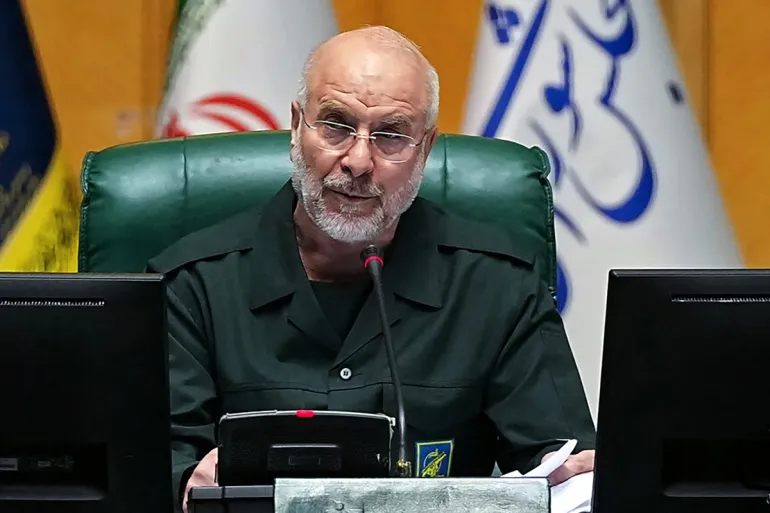
Iranian Parliament Speaker Mohammad Bagher Ghalibaf used a well-known economics formula to mock the United States as the conflict between Tehran and Washington continues to affect oil supplies and shipping.
His message focused on the Strait of Hormuz, a vital route for global oil shipments.
The post came just hours before the US Federal Reserve raised its main interest rate by 25 basis points, or 0.25 percentage points.
Ghalibaf Turns Economics Into a Political Joke
Ghalibaf posted a modified version of the Taylor Rule, an economic formula used to help understand where interest rates might be set.
He changed the formula to fit the situation surrounding the Strait of Hormuz.
His basic message was simple: raising interest rates cannot reopen the Strait of Hormuz or create more oil.
It was clearly meant as a political jab, but it also pointed to a real economic problem.
When oil supplies are disrupted, prices can rise. Higher fuel prices can then increase transportation and business costs, eventually affecting consumers.
What Exactly Is the Taylor Rule?
The Taylor Rule was developed by economist John Taylor in the early 1990s.
It gives economists a simple way to think about how interest rates might respond to inflation and the strength of an economy.
When inflation is high, the rule generally suggests higher interest rates. When inflation is low and economic activity is weak, it generally points toward lower rates.
However, the Federal Reserve does not simply follow the Taylor Rule like a fixed instruction.
Fed officials consider many other factors, including inflation, employment, economic growth, consumer spending and financial conditions.
Why the Strait of Hormuz Matters
The Strait of Hormuz is one of the world's most important energy routes.
Large quantities of oil pass through the waterway, meaning serious disruption can raise fears about global supplies.
Those fears can push oil prices higher.
Higher oil prices can then affect economies around the world. Fuel becomes more expensive, transportation costs can increase and businesses may face higher operating expenses.
This is why developments around Hormuz can become an issue for US economic policymakers.
Can Iran Influence US Interest Rates?
Iran can indirectly affect some of the economic pressures facing the United States, particularly through oil prices.
If the conflict causes energy prices to remain high, inflation in the US could become harder to bring down.
That is something the Federal Reserve has to consider.
But Iran is not the only factor.
US inflation, consumer spending, business investment, economic growth and other financial conditions also influence the Fed's decisions.
So it would be inaccurate to say that Iran directly controls US interest rates.
What Did the Federal Reserve Do?
On September 16, the Federal Reserve increased its benchmark interest-rate target by 25 basis points.
The target range moved to 3.75%–4%.
The decision came while US policymakers were still dealing with inflation and an economy that had continued to show strength in several areas.
Higher energy prices created another challenge.
The Fed can change interest rates, but it cannot produce more oil or physically reopen an important shipping route.
Is Iran Really “Setting” America's Interest Rate?
No.
Ghalibaf's claim is political messaging rather than a literal explanation of how US monetary policy works.
The Federal Reserve makes its own decisions after examining a broad range of economic data.
However, there is a real connection behind his argument.
If conflict around Iran disrupts oil supplies and pushes energy prices higher, those higher prices can contribute to inflation.
Inflation is one of the major issues the Federal Reserve considers when deciding what to do with interest rates.
So Iran can influence some of the economic conditions being watched by policymakers without actually deciding the interest rate.
Ghalibaf Has Used Economics Against Trump Before
This is not the first time Ghalibaf has used economic issues to criticize the Trump administration.
He has previously commented on oil prices and financial markets, arguing that financial moves cannot create actual fuel or solve shortages at petrol stations.
He also used the phrase “Make America Hungry Again” in a social-media post, turning Trump's famous political slogan into a criticism focused on hunger and food insecurity in the United States.
His latest message uses a different tool: mathematics.
The Bigger Economic Problem
The situation highlights a difficult problem for central banks during international conflicts.
Interest rates can influence borrowing, spending and investment.
But they cannot repair damaged infrastructure, create missing oil supplies or reopen shipping routes.
That means a country can experience higher prices because of a supply disruption even when its central bank has limited power to solve the original problem.
The Message Behind the Math
Ghalibaf is not actually controlling US interest rates.
But his unusual equation highlights a genuine connection between the Iran conflict, oil prices and inflation.
If the conflict continues to affect global energy supplies, the economic consequences could reach markets and consumers far beyond the Middle East.
And that is what makes Ghalibaf's "math attack" interesting.
The Federal Reserve can change interest rates—but 25 basis points cannot create a barrel of oil or reopen the Strait of Hormuz.