A FUEL PRICE SHOCK SENDS SYRIANS INTO THE STREETS
Syria has been hit by some of its most widespread protests since the fall of Bashar al-Assad, after the transitional government sharply increased fuel prices and intensified pressure on an economy already struggling to recover from years of war.
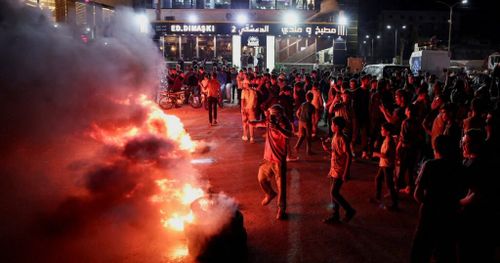
Demonstrations were reported across several parts of the country, with protesters blocking major roads and burning tyres. The unrest has turned a fuel-price decision into a much bigger test for President Ahmed al-Sharaa's government.
The price increases took effect on Sunday, September 13, with diesel rising by about 40 percent and petrol prices increasing by roughly 26 to 28 percent depending on the grade.
The government described the increases as temporary, pointing to rising international fuel procurement costs and Syria's heavy dependence on imports.
PROTESTS SPREAD ACROSS MULTIPLE AREAS
Demonstrations were reported in cities and communities including Hama, Khan Sheikhoun, Maarat al-Numan and Aleppo, with additional reports of unrest in other parts of the country.
Video footage showed crowds gathering along roads and protesters setting tyres alight.
Some demonstrators blocked important highways, including routes connecting Damascus, Aleppo and the Turkish border. Reuters also reported that protesters obstructed convoys carrying crude oil toward refineries.
The protests were not limited to complaints about the price of fuel. Some demonstrators called for senior officials to resign, reflecting broader frustration over living costs and the pace of economic recovery.
WHY THE GOVERNMENT RAISED FUEL PRICES
Syrian authorities say the decision was driven largely by the rising cost of securing fuel from international markets.
The country relies heavily on imported petroleum products because domestic production is far below what the population and economy require.
Energy Minister Mohammed al-Bashir said Syria currently produces roughly 102,000 barrels of oil per day, while domestic requirements are around 325,000 barrels per day.
That enormous gap leaves the country dependent on imports to keep transport, industry, electricity generation and other parts of the economy functioning.
THE BANIYAS REFINERY HAS BECOME A CRITICAL PIECE OF THE PUZZLE
Another major factor is the overhaul of the Baniyas refinery, Syria's largest refinery.
The facility has been undergoing major maintenance, temporarily reducing the country's ability to process crude oil domestically.
The government says the overhaul is intended to improve the refinery and eventually increase its capacity from around 80,000 barrels per day to approximately 130,000 barrels per day.
Officials argue that strengthening domestic refining capacity will eventually reduce Syria's vulnerability to international fuel markets.
For consumers facing higher prices today, however, the promised future improvement offers little immediate relief.
FUEL HAS ALREADY BECOME MUCH MORE EXPENSIVE
The latest increase is not occurring in isolation.
Reuters reported that 95-octane gasoline has risen by around 86 percent since February, while diesel prices have more than doubled over the same period.
The increase in global crude prices has been driven by wider disruptions linked to conflicts and instability across the Middle East and surrounding energy routes.
That means Syria is facing a difficult combination: expensive imports, limited domestic refining capacity and a population already struggling with weak purchasing power.
WHY FUEL PRICES MATTER SO MUCH
Fuel is not simply another household expense.
When diesel and petrol become more expensive, the impact can spread rapidly through almost every part of the economy.
Transport operators face higher costs. Bus and taxi fares can rise. Businesses pay more to move goods. Farmers can face increased costs for machinery and transportation.
Those additional expenses can eventually push up the prices of food and other everyday necessities.
That is why the protests have become about more than petrol stations. For many Syrians, the fuel increase represents another warning that the cost of rebuilding their lives may be becoming harder to bear.
SYRIA IS TRYING TO REBUILD AFTER YEARS OF WAR
The protests come as Syria attempts to rebuild an economy devastated by more than a decade of conflict.
Years of war damaged infrastructure, disrupted oil production, weakened industry and contributed to widespread poverty.
Reuters cited United Nations Development Programme estimates that around 90 percent of Syrians live below the poverty line, compared with roughly one-third before the civil war began.
That makes sudden increases in basic costs particularly sensitive.
RUSSIA'S FUEL SUPPLIES ARE ALSO UNDER PRESSURE
Syria's energy difficulties are connected to developments far beyond its borders.
The country has relied significantly on Russian crude imports, but Russian fuel supplies have come under pressure following Ukrainian attacks on Russian energy infrastructure.
Moscow has also restricted some fuel exports as it deals with domestic supply concerns.
For Syria, disruptions affecting international suppliers can quickly become a domestic problem because the country lacks enough production and refining capacity to fully protect itself from external shocks.
THE GOVERNMENT SAYS THE PRICE HIKES CAN CHANGE
Syrian energy authorities have stressed that the new prices are not necessarily permanent.
The Energy Ministry says it will continue monitoring international market conditions and could adjust domestic prices as procurement and supply costs change.
The government also says its longer-term strategy involves expanding refining and storage capacity so Syria can become less dependent on expensive imports.
The challenge is convincing a population under severe economic pressure that today's sacrifice will eventually produce better conditions.
THE POLITICAL TEST FOR AHMED AL-SHaraa
The demonstrations represent an important political test for President Ahmed al-Sharaa's transitional government.
The government came to power promising to rebuild institutions and revive an economy damaged by years of conflict.
But economic recovery is likely to be measured by ordinary people through very practical questions: Can they afford transport? Can businesses operate? Can food prices remain manageable? Can families find stable incomes?
A government can explain why international fuel prices have risen, but protesters ultimately feel the consequences in their daily lives.
THE BIGGER FEAR: A COST-OF-LIVING SPIRAL
The greatest concern is that higher fuel prices could trigger a chain reaction across the economy.
Transport costs can rise first, followed by the cost of moving food, construction materials and other goods.
Businesses may then increase prices to cover higher operating expenses, putting further pressure on households.
For a country already dealing with widespread poverty, even relatively small increases in everyday expenses can have significant consequences.
A WARNING SIGN FOR SYRIA'S RECOVERY
The protests reveal the difficult balance facing Syria.
The government needs to pay more for fuel imports and repair critical energy infrastructure, but increasing prices can make life significantly harder for people who are already struggling.
At the same time, keeping prices artificially low without sufficient funding could contribute to shortages and make it harder to maintain reliable supplies.
That leaves Damascus facing an uncomfortable choice between protecting consumers today and keeping the energy system financially sustainable for tomorrow.
WHAT HAPPENS NEXT?
The immediate question is whether the government will maintain the new prices or respond to public pressure with another adjustment.
The longer-term question is whether Syria can rebuild enough domestic energy capacity to reduce its dependence on international fuel markets.
The government says refinery upgrades, expanded storage and increased production are part of that strategy.
But until those investments translate into reliable and affordable supplies, fuel prices are likely to remain one of the most politically sensitive issues facing the country.
CONCLUSION
Syria's fuel crisis has quickly become much more than an energy story.
A sharp increase in diesel and petrol prices has pushed frustrated citizens onto the streets, blocked major roads and exposed the enormous economic challenges facing the country after years of war.
The government says the increases are necessary and temporary. Protesters are demanding immediate relief.
The outcome could become an early measure of whether Syria's new leadership can navigate the painful economic realities of rebuilding a country while maintaining public confidence.