TRUMP DISMISSES QUESTIONS OVER CHINESE SATELLITE IMAGERY
US President Donald Trump has played down a report alleging that Chinese entities supplied Iran with high-resolution satellite imagery before a deadly attack on American forces in Jordan.
The revelation has raised fresh questions about the growing links between Iran and China and whether Chinese technology may be giving Tehran a better picture of American military positions.
But Trump appeared reluctant to turn the issue into another confrontation with Beijing.
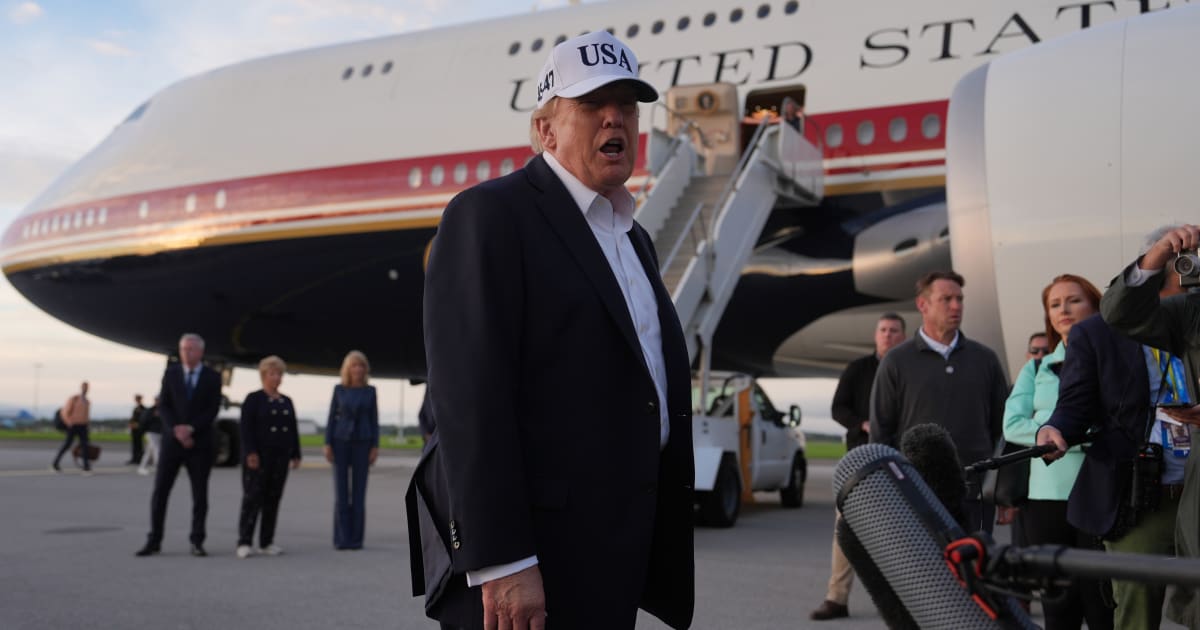
Speaking aboard Air Force One, the president compared China's alleged surveillance activities with those carried out by the United States.
His response suggested that he does not currently view the reported activity as a reason to dramatically change his approach toward Beijing.
THE ATTACK THAT PUT THE ISSUE UNDER THE SPOTLIGHT
The controversy centers on a July 17 Iranian missile attack against Muwaffaq Salti Air Base in Jordan.
The attack struck an area where American troops were stationed and killed three US service members while injuring four others.
According to US officials cited by The Wall Street Journal, Iran obtained high-resolution satellite images of the base from Chinese entities both before and after the attack.
US officials have reportedly connected the imagery to the strike, although they have not publicly identified the Chinese companies involved.
CHINA HAS NOT BEEN ACCUSED OF DIRECTLY ORDERING THE ATTACK
One of the most important details in the story is what Washington has not claimed.
US officials have not publicly accused the Chinese government of directly coordinating the Iranian missile attack.
Instead, the allegations concern Chinese entities that allegedly provided imagery that could have helped Iran understand the layout and recent changes around American military facilities.
China has rejected Washington's accusations and has demanded evidence.
That distinction could become crucial as the United States attempts to determine whether commercial or state-linked Chinese technology is being used to strengthen Iran's military capabilities.
WHY SATELLITE IMAGERY MATTERS
Modern satellite imagery can provide far more than a simple photograph from space.
High-resolution images can reveal changes at military facilities, construction activity, equipment positions and other developments that may not be visible through older or lower-quality imagery.
US officials believe the information available to Iran improved over the course of the conflict.
Analysts cited in the reporting say recently obtained imagery could potentially help an attacker identify important changes at a military installation and evaluate the effects of previous attacks.
However, satellite imagery would likely be only one part of a much larger intelligence picture.
Iran also has its own intelligence capabilities and has reportedly obtained information from other sources, including Russia and commercial providers.
WASHINGTON HAD ALREADY WARNED BEIJING
The latest revelation did not emerge in isolation.
The Trump administration had previously warned Beijing about Chinese companies allegedly providing satellite imagery that Iran could potentially use against American forces.
In May, Washington sanctioned three Chinese companies over alleged assistance involving satellite imagery and Iran.
US officials have also expressed concern that Chinese technology and data could help Iran improve its ability to track American military assets in the region.
The latest report therefore adds another layer to an issue that Washington and Beijing were already discussing behind closed doors.
TRUMP'S RESPONSE COULD SIGNAL A DIFFERENT PRIORITY
Rather than publicly threatening China over the latest allegations, Trump emphasized the broader reality of intelligence competition between major powers.
His argument was essentially that China conducts surveillance while the United States does the same.
That response could reflect the administration's desire to avoid allowing the controversy to derail its wider relationship with Beijing.
The two countries are already dealing with major disagreements involving trade, technology, security and global influence.
A DELICATE TRUMP-XI MEETING AHEAD
The timing of the report could hardly be more significant.
Trump and Chinese President Xi Jinping are expected to meet in the United States on September 24, although Beijing has not yet officially confirmed the meeting.
Any discussion of Chinese support for Iran could make an already complicated summit even more sensitive.
Washington wants to maintain pressure on Beijing while also preserving communication with the Chinese leadership.
For Trump, the challenge will be balancing those competing objectives without allowing the Iran conflict to become another major source of US-China confrontation.
IRAN'S MILITARY CAPABILITIES ARE UNDER SCRUTINY
The satellite imagery allegations have also drawn attention to a broader question: how has Iran improved its ability to identify and strike American positions?
Earlier in the conflict, Iranian attacks frequently failed to hit their most valuable targets.
US officials now say Iran's targeting ability appeared to improve later in the war.
The Wall Street Journal reported that American officials are increasingly concerned about whether Chinese technology, data or imagery could be contributing to that improvement.
That concern extends beyond land bases.
US officials have also been examining whether foreign-provided information could help Iran track American naval assets in the region.
CHINA'S ROLE IS BECOMING A BIGGER QUESTION
The dispute highlights how technology is changing modern geopolitics.
Satellite imagery, navigation systems, drones and other advanced technologies can give countries capabilities that were once available mainly to major military powers.
For Washington, the concern is not necessarily that Beijing is openly fighting alongside Tehran.
Instead, the bigger question is whether Chinese commercial or state-linked technology is indirectly strengthening Iran's ability to threaten American forces.
That distinction could shape the next stage of US policy toward Chinese technology companies.
A NEW FRONT IN THE US-CHINA RIVALRY?
The allegations arrive at a moment when Washington and Beijing are already competing for influence across the Middle East and beyond.
China has maintained important economic and diplomatic relationships with Iran, while the United States remains deeply involved in regional security.
If Washington concludes that Chinese companies are materially improving Iran's ability to target American forces, pressure for additional sanctions or restrictions could increase.
Beijing, meanwhile, is likely to resist attempts to portray China as a direct participant in the conflict.
THE BIG QUESTION: WHAT DID IRAN KNOW?
The most consequential unanswered question is how much the satellite imagery actually contributed to the July attack.
US officials have linked the imagery to the strike, but the publicly available reporting does not establish that it was the only or decisive source of Iranian targeting information.
Military operations typically rely on multiple intelligence sources.
The imagery could therefore have been one piece of a much larger intelligence operation rather than the sole reason Iran was able to identify its target.
THE DIPLOMATIC CLOCK IS TICKING
With the Trump-Xi meeting approaching, Washington has little time to decide how aggressively it wants to pursue the issue.
A public confrontation could increase pressure on Beijing but also make negotiations more difficult.
Ignoring the allegations, however, could raise questions about how seriously Washington treats assistance that potentially improves Iran's ability to threaten US forces.
The outcome could influence not only the US-China relationship but also how governments regulate commercial satellite companies whose technology can be used for both civilian and military purposes.
CONCLUSION
A deadly attack on American troops in Jordan has now become part of a much larger geopolitical controversy.
US officials say Chinese entities supplied Iran with satellite imagery linked to the attack, while Beijing rejects the accusation and Washington has stopped short of blaming the Chinese government directly.
Trump, meanwhile, has chosen to downplay the issue rather than escalate the dispute publicly.
With a potentially important meeting with Xi Jinping approaching, the question is no longer simply what happened at a Jordanian military base.
It is whether the world's leading powers are entering a new era in which commercial satellites, data and technology can quietly reshape the balance of military power.