Space Arms Race Accelerates as US Confirms Weapons in Orbit
The militarisation of space has entered a new phase after the United States publicly confirmed that its Space Force has deployed weapons in orbit. Air Force Secretary Troy Meink made the announcement on September 14, saying the United States now has “on-orbit space control weapons” capable of defending the joint force against hostile action. The announcement represents the first public confirmation from Washington that it has such weapons deployed in space, although officials have provided few details about the systems or their capabilities.
The Space Force described space control as the ability to contest and control the space domain using both kinetic and non-kinetic means. Those categories can include technologies designed to interfere with, disable or otherwise affect an adversary's satellites and other space-based systems. However, Meink did not say what specific weapons are currently in orbit, when they were deployed, what they are capable of targeting or whether they have been tested in an operational scenario.
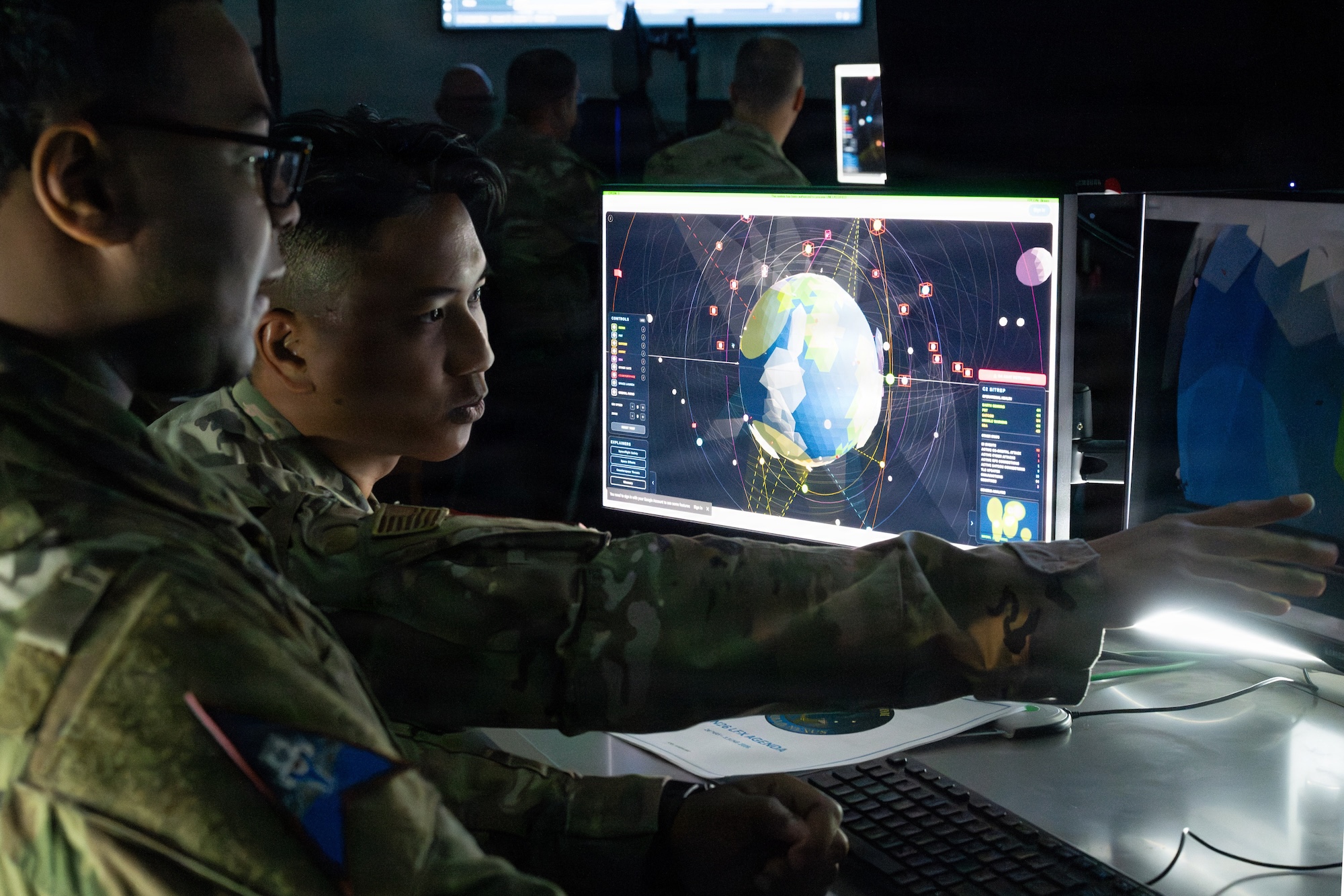
The announcement comes as the United States, China and Russia increasingly view space as a critical component of national security. Modern militaries depend heavily on satellites for communications, navigation, intelligence, surveillance and missile warning. As a result, the ability to protect those systems — while potentially disrupting an adversary's capabilities — has become an increasingly important part of military planning. Recent analysis has highlighted the development of manoeuvrable satellites, spaceplanes and other technologies that could potentially be used for surveillance, jamming or interference with other spacecraft.
Washington has justified its growing focus on space security by pointing to developments by China and Russia. The U.S. Space Force has described China as its principal strategic challenge in space and has warned that both China and Russia are developing capabilities designed to disrupt or degrade U.S. space systems. Russia, meanwhile, has demonstrated military satellites capable of conducting close orbital manoeuvres, while the United States says Moscow has also developed ground-based laser and electronic-warfare capabilities that can interfere with satellite operations.
Not all space weapons involve physically destroying satellites. Non-kinetic systems such as electronic jammers, spoofing systems and lasers can potentially interfere with communications, sensors or other satellite functions without creating the large clouds of debris associated with an anti-satellite missile strike. Kinetic attacks, by contrast, can generate dangerous debris that may remain in orbit and threaten other spacecraft, including satellites belonging to the country carrying out the attack.
That distinction is particularly important because the number of satellites operating around Earth is increasing rapidly. Governments, militaries and private companies increasingly depend on orbital infrastructure, while large commercial constellations are providing communications, internet and other services. A major conflict in orbit could therefore have consequences extending far beyond military operations.
The development of space-based weapons also raises questions about international law. The 1967 Outer Space Treaty prohibits countries from placing nuclear weapons or other weapons of mass destruction in orbit, but it does not impose a general ban on conventional military systems in space. This has left room for countries to develop a range of anti-satellite, electronic-warfare and other counterspace capabilities while remaining within the treaty's specific restrictions.
The United States says its newly acknowledged weapons are intended to provide deterrence and protect its forces against hostile action. China and Russia, however, have their own concerns about the growing military presence in orbit, creating the possibility of a cycle in which each country's efforts to improve its security are interpreted by others as preparations for offensive action. Experts have warned that publicly acknowledging these capabilities could encourage other powers to become more open about their own space weapons programmes.
For now, the precise nature of the American systems remains unclear. That lack of information makes it difficult to determine how significant the new deployment is compared with existing U.S., Chinese and Russian capabilities. What is clear is that space is becoming an increasingly contested military domain, with major powers investing in technologies intended not only to use satellites but also to protect, disrupt and potentially attack them.
As competition intensifies, the central challenge will be preventing military preparations in orbit from developing into a conflict that could damage the wider space environment. With civilian economies and critical infrastructure increasingly dependent on satellites, the consequences of a major space conflict would extend well beyond the world's militaries.