
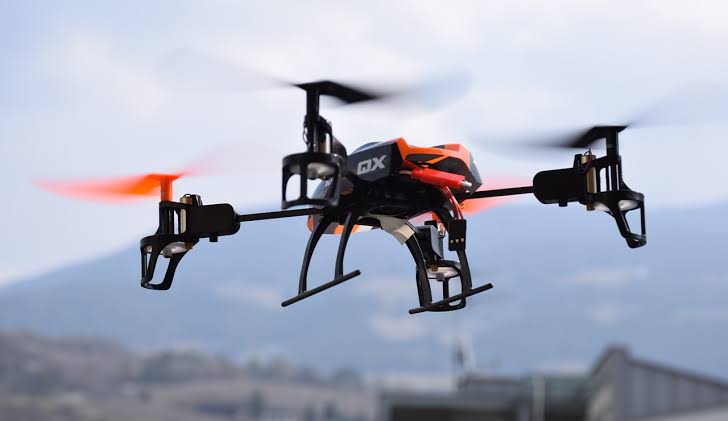
Cities are increasingly having to look upward as drones become a more visible part of modern security challenges.
What was once mainly associated with military operations is now becoming an urban security concern. Drones can be used for legitimate purposes such as surveying, emergency response and infrastructure inspection, but unauthorized aircraft can also create serious challenges for airports, public events, critical infrastructure and crowded areas.
As the technology becomes more accessible, authorities are being forced to rethink how cities can detect and respond to potential threats without putting civilians at greater risk.
THE DRONE THREAT IS EVOLVING
One of the biggest difficulties is the speed at which drone technology is developing.
Modern unmanned aircraft can be small, relatively inexpensive and difficult to distinguish from legitimate activity. That creates a challenge for authorities because detecting an aircraft is only the first step. They must also determine what it is, whether it is authorized and whether it represents a genuine threat.
The UK's National Protective Security Authority identifies drones as a potential security concern because they can be used for reconnaissance and against people or assets. Its guidance encourages organizations to assess drone-related risks as part of wider protective security planning.
PROTECTING PEOPLE WITHOUT CREATING NEW RISKS
Responding to an unidentified drone over a populated area is particularly complicated.
A defensive action that brings down an aircraft could potentially create hazards of its own, especially in busy urban environments. Authorities therefore have to consider not only whether a drone can be stopped, but also what could happen after an interception.
This makes civilian protection a central part of the counter-drone debate.
The objective is increasingly becoming a layered approach in which detection, identification, decision-making and response work together rather than relying on a single technology.
CITIES ARE TESTING DIFFERENT APPROACHES
Governments and security organizations are examining a variety of technologies to improve their ability to detect and respond to unauthorized drones.
Electronic countermeasures, specialized interceptor aircraft and other detection technologies are among the approaches being explored.
The European security debate is increasingly focused on combining several capabilities rather than depending on one system. Recent analysis of Europe's drone challenge has emphasized the need for multiple layers of detection and response because different environments can present very different problems.
This is particularly important around critical infrastructure, where authorities may need to monitor large areas while distinguishing legitimate drone activity from potentially dangerous incidents.
THE IMPORTANCE OF DETECTION
Effective protection begins with knowing what is happening in the airspace.
Authorities need systems capable of identifying unusual activity and building an accurate picture of what is flying overhead.
This is becoming more difficult as the number of legitimate drone operations also increases.
A growing drone economy means cities cannot simply treat every unidentified aircraft as an immediate threat. They need systems that can help separate authorized operations from suspicious or potentially dangerous activity.
That distinction is becoming an important part of modern low-altitude airspace management.
LOW-TECH SOLUTIONS STILL HAVE A ROLE
The race to develop sophisticated technology does not mean every useful solution has to be complicated.
Physical barriers and nets can provide another layer of protection in particular environments. Their appeal comes partly from their simplicity and from the possibility of reducing some of the risks associated with more forceful forms of interception.
The broader lesson is that effective drone protection may depend on combining advanced systems with relatively simple measures.
Different locations will also require different approaches. A busy airport, a stadium, a government facility and an industrial site do not face exactly the same risks.
EUROPE FACES A GROWING SECURITY CHALLENGE
The issue has become particularly visible across Europe, where authorities are dealing with both civilian drone incidents and the wider military implications of unmanned aircraft.
Recent European analysis has highlighted repeated drone sightings around critical infrastructure and argued that countries need stronger cooperation, information sharing and layered defenses.
The challenge is not limited to countries close to active conflict zones. Drone incidents involving sensitive infrastructure can affect cities far from traditional battlefields.
That has pushed governments to consider drone security as part of broader national and urban resilience.
DRONES ARE ALSO CHANGING DEFENSE TECHNOLOGY
The growing importance of drones is not only changing how cities defend themselves. It is also changing the wider technology and defense industries.
The UK government said in June 2026 that conflicts involving Iran and Ukraine had demonstrated how rapidly drone technology is reshaping modern warfare. Britain subsequently announced major investment in drones and autonomous systems as part of a wider defense modernization programme.
The UK has also committed funding to counter-drone capabilities as part of a defensive mission connected to security in the Strait of Hormuz.
These developments show how quickly drones have moved from being a specialized technology to becoming a major consideration in security planning.
THE COST OF KEEPING CITIES SAFE
Building an effective drone-defense network can be expensive.
Authorities must invest in detection systems, monitoring infrastructure, trained personnel and the technology required to respond to incidents.
There is also the question of scale. Protecting one sensitive facility is very different from monitoring an entire metropolitan area.
That is why governments are increasingly interested in systems that can work together and share information rather than operating as isolated technologies.
LEGAL AND OPERATIONAL QUESTIONS MATTER TOO
Technology alone cannot solve the problem.
Authorities also need clear rules about who is responsible for responding to suspicious drones and what actions can legally be taken in different circumstances.
Recent incidents in Europe have highlighted how legal uncertainty can complicate decisions involving unidentified aircraft.
This means future drone security systems will need to operate alongside aviation regulations, privacy protections, public-safety procedures and clearly defined responsibilities between different agencies.
THE RACE BETWEEN DRONES AND DEFENSES
The relationship between drones and counter-drone technology is becoming an ongoing technological race.
As drones improve, detection and protection systems must adapt. At the same time, authorities must ensure that new defensive technologies remain affordable, reliable and safe enough for use around civilians.
This creates a difficult balance.
A system may be highly effective in one environment but less useful in another. Weather, buildings, surrounding infrastructure, air traffic and population density can all influence how authorities manage drone activity.
That is why there is growing interest in flexible, layered systems rather than a single universal solution.
A NEW ERA OF URBAN SECURITY
The rise of drones is changing how cities think about security.
Urban authorities now have to consider threats that can approach from above while continuing to support the legitimate uses of unmanned aircraft.
At the same time, cities cannot ignore the benefits drones can provide. Local authorities already use drones for activities such as inspections, surveying and monitoring. For example, Sunderland City Council has used drones to support investigations into illegal waste dumping and other enforcement work.
The challenge is therefore not simply stopping drones. It is creating an environment where legitimate drone operations can continue while suspicious or dangerous activity can be identified and managed.
THE SEARCH FOR A BALANCED SOLUTION
The future of urban drone security is likely to involve several technologies working together.
Detection systems can provide awareness of activity in the airspace, identification tools can help determine whether an aircraft is authorized, and response systems can be used when authorities determine that intervention is necessary.
Alongside technology, governments will need better coordination, clearer responsibilities and stronger information sharing.
European experts have increasingly argued that cooperation between countries and agencies will be important because drone threats do not necessarily stop at national or organizational boundaries.
CONCLUSION
The rapid development of drones is forcing cities to rethink how they protect civilians and critical infrastructure.
The challenge is becoming more complex as drones grow cheaper, more capable and harder to distinguish from legitimate aircraft.
Authorities are responding by exploring layered approaches that combine detection, identification, electronic systems, interceptor technologies and simpler physical measures.
But technology will only be part of the answer.
The long-term challenge will be finding a balance between security, public safety, cost, privacy and the legitimate use of drones.
As unmanned aircraft continue to evolve, cities will have to evolve with them.