Ebola Reaches Kenya: Nairobi Death Raises Questions Over Border Screening
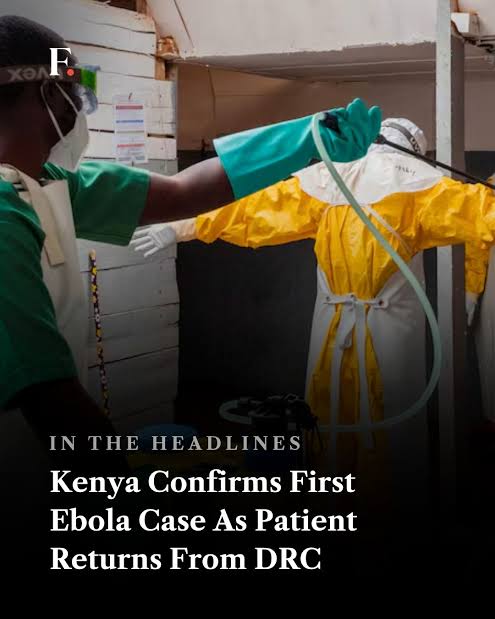
Kenya has confirmed its first imported case of Bundibugyo Ebola after a Kenyan citizen who had been living in the Democratic Republic of Congo travelled through Uganda before arriving in Nairobi, where he later died while receiving treatment. The case was confirmed by both Kenya’s National Virology Reference Laboratory and the Kenya Medical Research Institute, making Kenya the fourth country to report the Bundibugyo virus during the current outbreak.
The patient had reportedly been living in the Democratic Republic of Congo for several years and had fallen ill about a month before his journey. He received treatment at several hospitals in the DRC before travelling by road to Kampala, Uganda. From there, he boarded a Jambojet flight to Nairobi on October 3. After arriving at Jomo Kenyatta International Airport, he was taken directly to Nairobi Hospital, where he was isolated before being transferred to the hospital’s East Wing Isolation Facility.
The patient developed symptoms including fever, chills, fatigue, weakness, muscle pain, a sore throat, painful swallowing and bleeding beneath the skin at injection sites. Despite receiving supportive treatment, he died on October 5 and was buried under Ebola safe and dignified burial protocols.
The case has raised questions about how an infected traveller managed to pass through health screening systems in Uganda and Kenya. Kenyan authorities have suggested that medication taken by the patient may have masked some symptoms during screening, while investigations are continuing into his movements and the information recorded during his journey. Reuters reported that the patient passed through temperature checks and health declaration procedures before reaching Nairobi.
Kenya has now intensified contact tracing. The Ministry of Health initially identified 28 contacts, including relatives and healthcare workers, while also tracing 23 passengers and four crew members who were on the same flight from Uganda. A subsequent Ministry update said the number of identified contacts had risen to 57, with 10 people already accounted for and placed under quarantine.
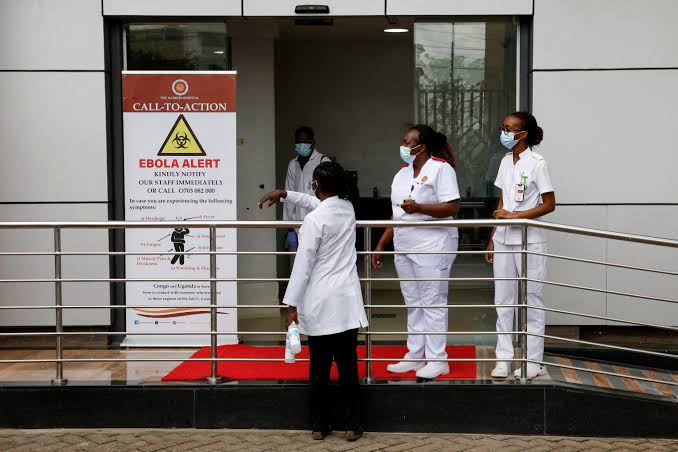
Authorities have also strengthened screening at points of entry and are preparing isolation capacity in case additional cases are detected. Kenya currently has designated Ebola isolation facilities at five hospitals, with Nairobi Hospital alone having a 133-bed isolation unit. Temporary isolation centres have also been identified at key border points, while traveller screening has been intensified at Nairobi airport and other high-risk entry points.
The Ministry says Kenya had already been on heightened alert since the outbreak began in May. By October 6, health authorities had screened more than 652,000 travellers and tested 267 samples across five laboratories before the first positive case was identified. Nearly 5,000 health workers have also received training in Ebola prevention and management.
The wider outbreak in the Democratic Republic of Congo has placed additional pressure on neighbouring countries. The Bundibugyo virus outbreak has spread across several provinces in the DRC and previously reached Uganda, which declared its latest outbreak over in 2026. The movement of people across borders, trade routes and areas affected by insecurity makes stopping every infected traveller particularly difficult.
For Kenya, health officials and international partners are now focused on finding any additional infections before they lead to community transmission. The World Health Organization is supporting the response, including surveillance, testing and protective equipment. WHO has stressed that rapid detection, isolation, contact tracing and coordinated action will be critical in preventing the virus from gaining a foothold in the country.
The incident also highlights the importance of public cooperation. Health authorities are urging travellers to provide accurate information on health declaration forms, while people who develop symptoms or believe they may have been exposed are being encouraged to seek medical attention promptly. Officials have also urged the public to rely on verified health information rather than rumours as contact tracing continues.