
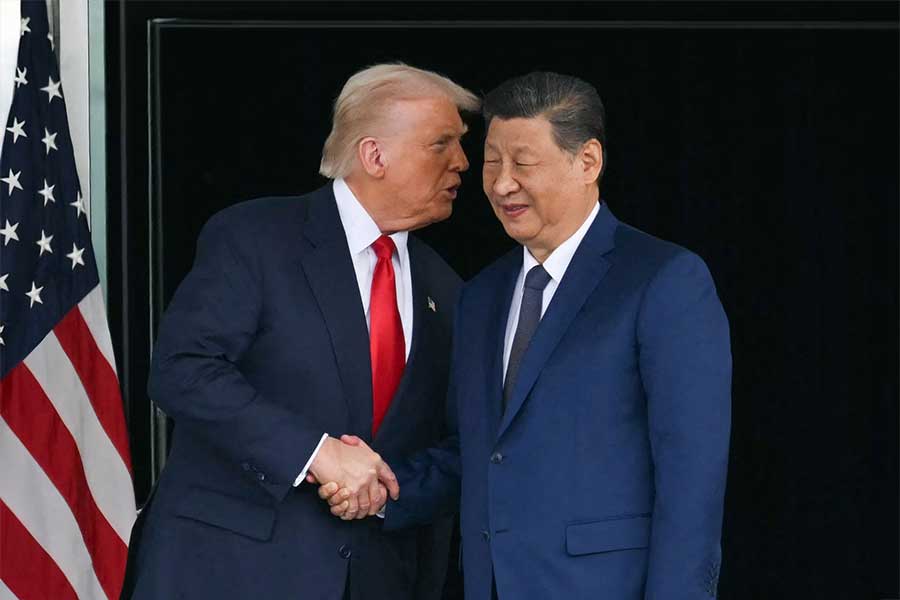
Trump-Xi Summit Puts Trade, Taiwan and AI at the Center of US-China Tensions
US President Donald Trump and Chinese President Xi Jinping are preparing to meet at the White House on September 24 as Washington and Beijing attempt to manage tensions between the world's two largest economies. The summit follows roughly eight hours of preparatory talks in New York between US Treasury Secretary Scott Bessent, US Trade Representative Jamieson Greer and Chinese Vice Premier He Lifeng and trade negotiator Li Chenggang. The discussions produced some movement on trade and artificial intelligence, but no major new agreement was announced. Washington proposed establishing a US-China AI dialogue that could include a notification mechanism for serious artificial-intelligence incidents with potential national-security implications, while both sides also discussed implementing an existing process for identifying certain non-strategic goods that could qualify for lower tariffs.
Trade remains one of the central issues facing Trump and Xi. The two governments are operating under a fragile trade truce that is due to expire in November, and Washington has continued pressing Beijing over market access, agricultural purchases and the supply of rare-earth materials and other critical minerals. China, meanwhile, has sought further tariff relief from the United States. Earlier commitments have also progressed unevenly, with promised purchases of US agricultural products and Boeing aircraft yet to fully materialize.
Artificial intelligence has added another layer to the relationship. Both countries are competing to develop increasingly advanced AI systems while also confronting concerns over cybersecurity, national security and potential misuse of the technology. The proposed notification mechanism could provide a channel for communicating about serious AI-related incidents, although US officials have indicated that the initiative would not cover existing restrictions on advanced AI chips and semiconductor manufacturing equipment. That leaves some of the most contentious technology issues outside the proposed area of cooperation.
Taiwan is another major point of disagreement. Beijing considers Taiwan part of China and has opposed moves that could strengthen the island's separate international status, while Washington maintains longstanding relations with Taiwan and has provided it with defensive arms. Reuters reported that Chinese officials have sought greater clarity from Washington over its position on Taiwan's independence, while any significant change in US policy could have wider implications for relations with allies and lawmakers in Washington.
The summit also comes amid wider geopolitical tensions, including disagreements over Iran and China's relationship with Tehran. Reuters and other reporting indicate that the two leaders are seeking greater stability in their relationship even as competition continues across trade, technology and security. Analysts cited by the Associated Press expect limited progress rather than a sweeping breakthrough, with maintaining dialogue and preventing renewed escalation likely to be important objectives of the meeting.
For Trump and Xi, the Washington meeting therefore represents another attempt to establish a workable framework for managing competition rather than eliminating the fundamental disagreements between the two countries. Whether the leaders can translate the preparatory discussions into concrete agreements on trade, AI or other areas will be closely watched, particularly as the existing trade truce approaches its November deadline.