A VENICE VICTORY TURNS INTO A POLITICAL FIRESTORM
What began as a major moment for two Israeli filmmakers at one of the world's most prestigious film festivals has quickly turned into a political confrontation at home.
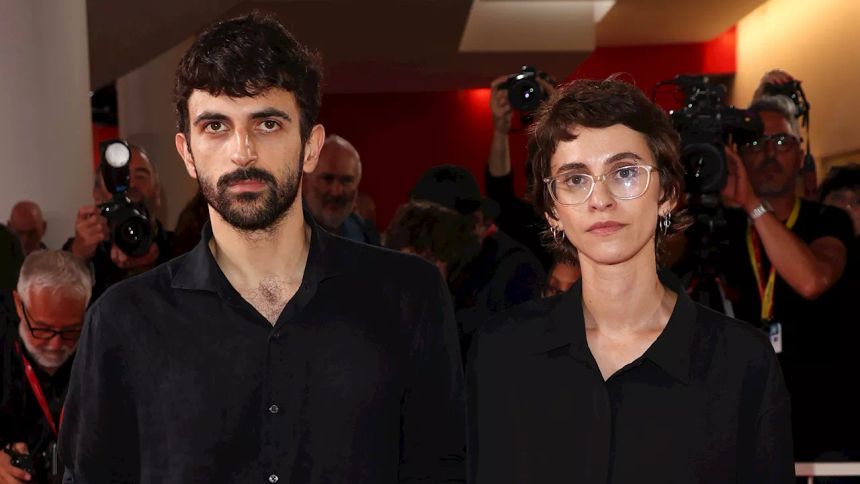
NAZA, directed by Israeli filmmakers Yuval Abraham and Rachel Szor, received the Special Jury Prize at the 83rd Venice International Film Festival on September 12.
The award has placed the documentary at the centre of an increasingly heated debate over Israel's conduct in Gaza, freedom of expression and how governments respond when citizens publicly criticize state actions.
Just a day after the film's Venice recognition, Israeli Culture Minister Miki Zohar announced that he intended to pursue steps to revoke the filmmakers' Israeli citizenship.
MINISTER ACCUSES FILMMAKERS OF TREASON
Zohar sharply condemned Abraham and Szor following the film's success.
The culture minister described the documentary as an attack on Israel and accused its creators of damaging the country for international recognition.
He characterized their actions as “treason against the state” and said he would move to revoke their citizenship.
The remarks have transformed a film-festival controversy into a much larger political dispute over whether filmmakers can face state punishment for producing work critical of their own government.
THE FILM THAT TRIGGERED THE BACKLASH
NAZA is an 80-minute documentary examining alleged Israeli military practices during the war in Gaza.
According to the Venice Film Festival's official description, the film investigates systems that the filmmakers say contributed to the calculated killing of Palestinian civilians.
The documentary relies heavily on testimony from Israeli military and intelligence insiders who spoke anonymously.
Among the subjects examined is the alleged use of artificial-intelligence-assisted systems in military targeting.
The filmmakers argue that technology became part of a wider system for identifying targets and estimating potential civilian casualties.
WHAT THE FILM CLAIMS ABOUT AI
One of the documentary's most controversial themes is the alleged role of artificial intelligence in Israel's targeting process.
The film examines an alleged system known as “Lavender” and other technologies that, according to testimony presented in the documentary, were used to process large amounts of intelligence and identify potential targets.
The filmmakers argue that these systems helped accelerate decisions about who or what could be targeted.
However, these claims remain disputed.
The Israeli military has rejected the documentary's allegations, saying that decisions to strike targets are made by human personnel rather than by artificial intelligence.
The military has also questioned the reliability of anonymous testimonies used in the film.
A DOCUMENTARY BUILT AROUND SECRET TESTIMONY
Abraham and Szor interviewed 24 Israeli military and intelligence insiders for the project.
The participants were filmed anonymously, with the interviews conducted in circumstances designed to protect their identities.
Their accounts form the foundation of the documentary's investigation into Israel's military and intelligence systems.
The use of anonymous sources has become one of the major points of contention surrounding the film.
Supporters argue that anonymity is essential for insiders who fear professional or legal consequences.
Critics say the lack of publicly identifiable sources makes some of the allegations difficult to independently verify.
VENICE GIVES THE FILM A MAJOR PLATFORM
Despite the controversy, the documentary received one of Venice's major awards.
The Special Jury Prize placed NAZA alongside some of the festival's most prominent productions.
The film also received a lengthy standing ovation at its premiere, underlining the strong reaction it generated among audiences and industry figures.
The award gave the documentary international visibility at precisely the moment when its political message was coming under intense criticism in Israel.
ABRAHAM AND SZOR ARE NO STRANGERS TO CONTROVERSY
The two filmmakers previously worked on No Other Land, a documentary about Palestinian communities and Israeli settler activity in the occupied West Bank.
That film won the Academy Award for Best Documentary Feature and brought the filmmakers international recognition.
Their new project goes further into the question of how Israel's military campaign in Gaza is planned and conducted.
That history helps explain why NAZA has attracted such intense attention even before its wider release.
THE CITIZENSHIP THREAT RAISES A BIGGER QUESTION
Zohar's threat has created a debate that extends beyond the documentary itself.
Citizenship is one of the most fundamental legal relationships between an individual and a state.
Any attempt to remove it because of a filmmaker's political or artistic expression would therefore carry consequences far beyond the film industry.
Reports indicate that citizenship revocation is legally possible in Israel in certain circumstances, but it is not an automatic process and requires legal and judicial procedures.
Zohar's announcement should therefore be understood as a threat to pursue the measure, not evidence that Abraham and Szor have already been stripped of citizenship.
ISRAEL'S GOVERNMENT AND THE FILMMAKERS TELL VERY DIFFERENT STORIES
At the centre of the dispute are two sharply opposing interpretations.
The filmmakers say NAZA examines systems behind the mass killing of Palestinian civilians and seeks to force audiences to confront what they describe as systematic practices.
Israeli authorities reject that portrayal and have accused the documentary of presenting false or misleading allegations about the military.
The Israeli military has specifically disputed the film's claims about AI-assisted targeting and questioned the credibility of anonymous testimony.
That disagreement is likely to remain central as the documentary reaches wider audiences.
WHY THE VENICE AWARD MATTERS
The award gives NAZA something that a political statement cannot easily provide: an international cultural platform.
Instead of being discussed only as a political argument inside Israel, the documentary is now part of a major global film event.
Its recognition also means that audiences, journalists and human rights advocates around the world are likely to examine the claims presented in the film more closely.
For the filmmakers, that international attention may be precisely the point.
A NEW BATTLE OVER FREEDOM OF EXPRESSION
The controversy has also revived a broader question about the limits of criticism during wartime.
Can filmmakers publicly accuse their own government of serious wrongdoing without being treated as enemies of the state?
Zohar's comments have intensified that debate.
Supporters of the filmmakers argue that artists and journalists must be able to investigate and criticize government conduct, particularly during war.
Critics of NAZA argue that accusations against the military should be supported by verifiable evidence and should not unfairly damage Israel's reputation.
THE FILM'S MESSAGE IS NOW BIGGER THAN THE SCREEN
NAZA was created as a documentary about Gaza.
But after the citizenship threat, the story has expanded into a confrontation over art, national identity and political dissent.
The filmmakers are now facing criticism from senior Israeli officials at the same time that their work is receiving recognition from an international film institution.
That contrast has made the documentary one of the most politically charged films to emerge from this year's Venice festival.
WHAT HAPPENS NEXT?
The immediate question is whether the citizenship threat will develop into a formal legal process.
Another is how Israeli authorities will respond as NAZA reaches audiences beyond the festival circuit.
The filmmakers, meanwhile, have indicated that they want the documentary to be seen in Israel as well as internationally.
The Israeli military's rejection of the film's allegations means the documentary is likely to face intense scrutiny from both supporters and critics.
Its international distribution could therefore turn NAZA into a major reference point in the continuing debate over the Gaza war.
CONCLUSION
A prestigious film award has unexpectedly opened another political front in Israel's debate over Gaza.
NAZA has won international recognition at Venice, while its Israeli directors, Yuval Abraham and Rachel Szor, are facing a threat from Culture Minister Miki Zohar to pursue the removal of their citizenship.
The filmmakers say their documentary exposes systems they believe contributed to the killing of Palestinian civilians.
Israeli authorities strongly dispute those claims.
What happens next could determine whether the controversy remains a battle over one documentary or becomes a much larger test of artistic freedom, political dissent and the limits of citizenship in wartime.