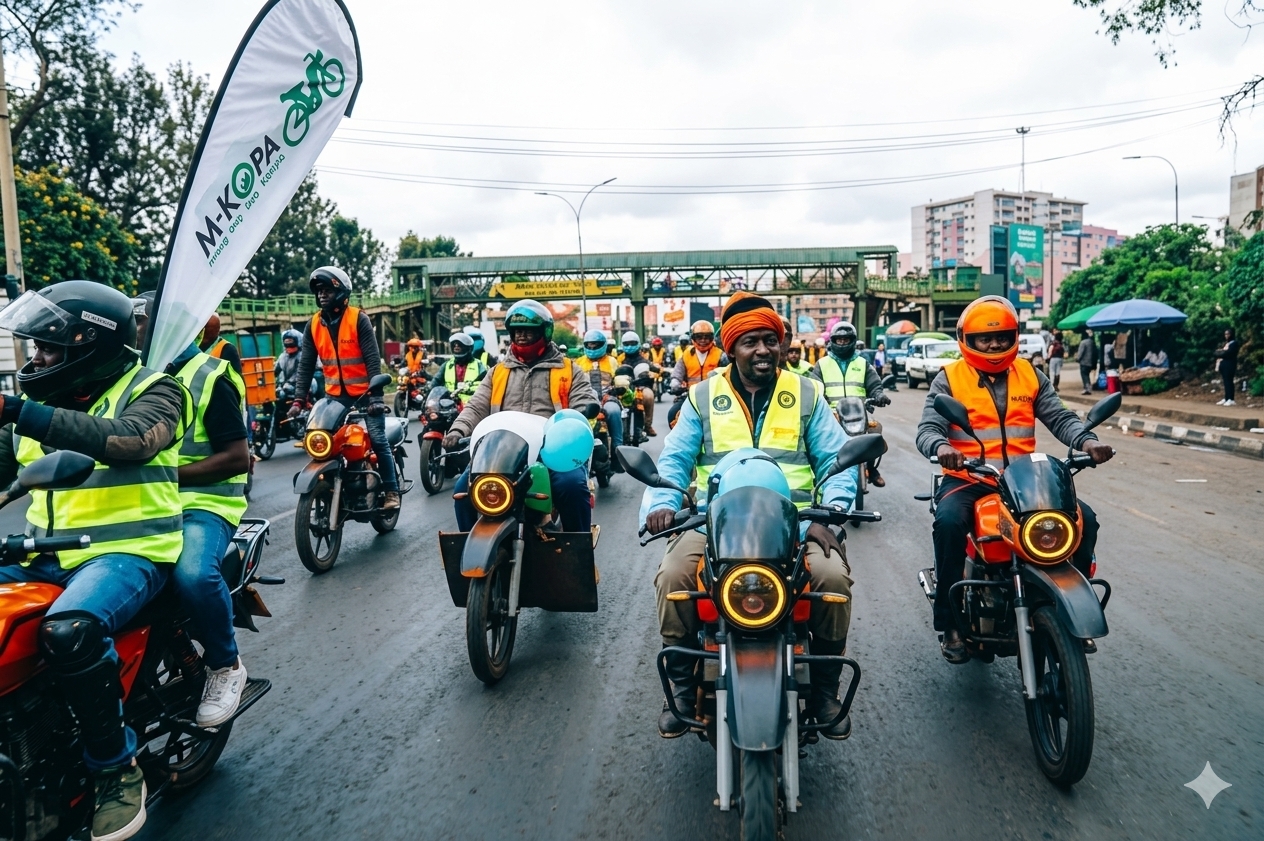
For years, the electric vehicle revolution has been pictured through the windshield of a car. In Kenya, the more important transformation is happening on two wheels.
The country’s boda-boda sector is quietly becoming the front line of its transition away from fossil fuels. By the end of 2025, the Electric Mobility Association of Kenya (EMAK) reported more than 35,000 electric vehicles in the country, most of them two-wheelers. By 2026, electric motorcycles accounted for roughly 15% of new motorcycle sales.
The reason is not simply environmental. It is economic.
For a motorcycle taxi rider, petrol is one of the largest daily operating expenses. Battery-as-a-service models allow riders to rent batteries rather than absorb their full upfront cost, then exchange a depleted battery for a charged one in seconds. Some reported cases show daily energy costs falling by 30% to 50% compared with petrol motorcycles.
That economic shift has a climate consequence.
Every motorcycle that replaces petrol with electricity reduces dependence on a fossil fuel supply chain. And Kenya is unusually well positioned for this transition because its electricity system is already dominated by renewable energy. According to the Energy and Petroleum Regulatory Authority (EPRA), clean energy accounted for 78.79% of electricity supplied to Kenya’s national grid, while renewable sources represented 80.60% of installed generation capacity.
This means Kenya is not simply replacing petrol engines with electric motors. It has an opportunity to power transport with an increasingly renewable electricity system.
The change is already visible in Kenya Power’s numbers. Between July 2023 and April 2026, Kenya Power earned KSh 382 million from electric vehicle charging. Monthly charging revenue climbed from KSh 873,907 in July 2023 to a peak of KSh 35.25 million in February 2026. Electricity consumption by the e-mobility sector rose from just 13,500 kWh in July 2023 to more than 1.5 million kWh in April 2026.
Kenya Power Managing Director Joseph Siror described the growth as evidence that electric mobility is “no longer a pilot, but a mainstream reality.”
But mainstream adoption creates a new climate challenge: infrastructure.
Battery-swapping stations and chargers must expand beyond Nairobi and other major urban centres. Kenya Power has already begun extending its network, including new charging stations in Voi and Nyali, while testing the readiness of charging infrastructure along the Nairobi-Mombasa and Nairobi-Kisumu routes.
Kenya is not alone in moving quickly. Ethiopia has taken a far more aggressive policy route, banning imports of conventional passenger cars in 2024 and building a rapidly expanding electric vehicle market. Energy for Growth Hub estimates that Ethiopia’s active EV fleet has surpassed 115,000 vehicles. Its experience demonstrates how strongly policy can accelerate an energy transition.
Kenya’s path is different. Its electric revolution is being pulled forward by the economics of the boda boda.
That makes the transition particularly significant for climate action. If Kenya can pair affordable electric motorcycles with renewable electricity, reliable charging, accessible financing and sound battery standards, it could cut transport emissions while reducing riders’ dependence on imported fuel.
The question is no longer whether Kenya can electrify mobility. It is whether the country can build the clean energy system needed to keep its electric wheels turning.
Sources: Energy and Petroleum Regulatory Authority (EPRA), Energy & Petroleum Statistics Report FY 2024/25; Kenya Power, E-Mobility Sales Growth Analysis Report, July 2023-April 2026; Electric Mobility Association of Kenya (EMAK), 2025 data cited by Kenya Power; National Transport and Safety Authority (NTSA), indicative 2026 registration data; Energy for Growth Hub, New Data Puts Ethiopia Among Global EV Leaders; UNECA, Ethiopia Launches National E-Mobility Strategy 2025–2030.